At Harper & Keele Veterinary School, students are stepping beyond the traditional microbiology bench and into an immersive 360° laboratory.
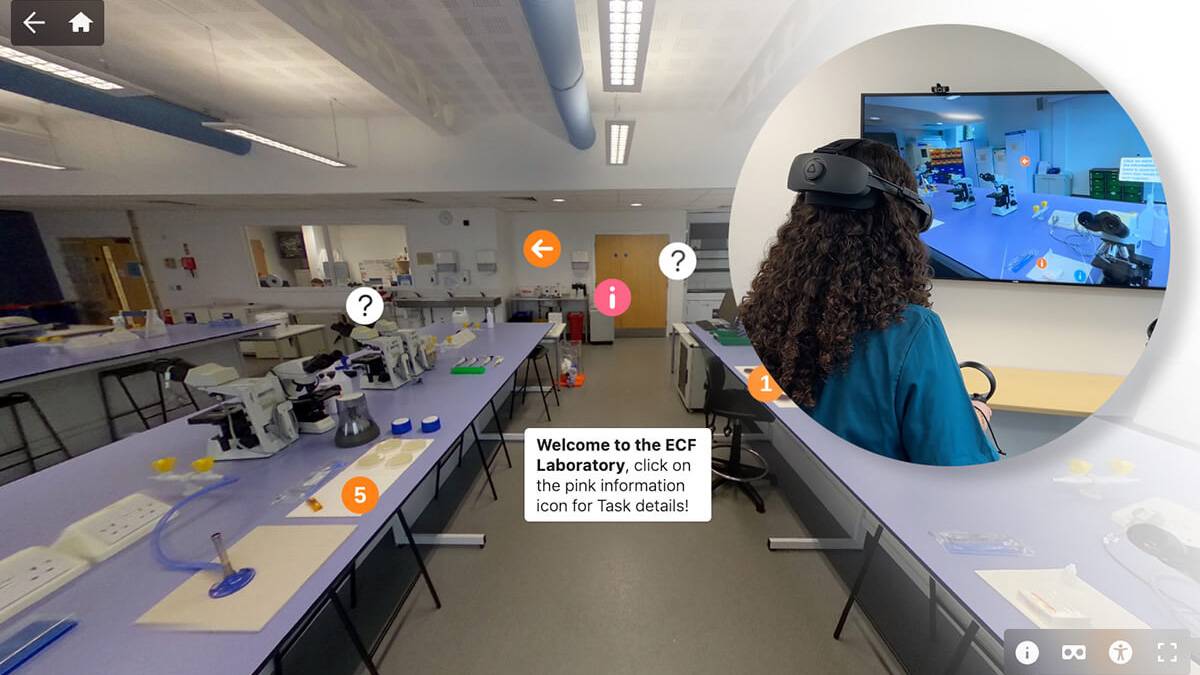
Created by Digital Education & Innovation Designer, Reg Icli and Teaching Fellow, Jess Nicholson, the immersive 360° microbiology laboratory supports the study of diagnostic bacteriology.
As part of the second year Animal Health Sciences module, vet students spend several practical sessions in a dedicated microbiology lab at Harper Adams University. During these sessions, they learn how to identify different bacteria species and how to correctly diagnose a bacterial infection in veterinary medicine.
To consolidate their learning, students were invited to solve a microbiological mystery!
Adopting a case-based learning approach, and supported by Teaching Fellow, Tom Leigh, they worked through a simulated scenario involving Rocky, a one-year-old German Shepherd presenting with an infected wound.
Acting as veterinary microbiologists, they used virtual reality headsets to enter the immersive 360° microbiology lab, completed devised tasks and collaborated in their teams to identity the mixed bacteria within Rocky’s wound to ensure correct diagnosis and the appropriate antibiotic treatment.
Jess said: “Despite the technological advancements in the last decade, some key practical aspects of microbiology are still unchanged, making the study of microorganisms inherently slow.
“These practical challenges can make it difficult for students to observe and learn about different bacteria species in real time. Using an immersive 360° environment, we have created an alternative practical that will streamline the diagnostic bacteriology process and consolidate module teaching while providing active student collaboration within an immersive learning experience.”
HKVS student, Niharika Menon, said: “Things like virtual reality headsets and immersive environments make it easier to build and practice skills without making mistakes, and if you do, you’re able to easily repeat.
“It also gives a fun, interactive experience without the pressure, and offers a different way to revise what we have been working on in the laboratory sessions.”

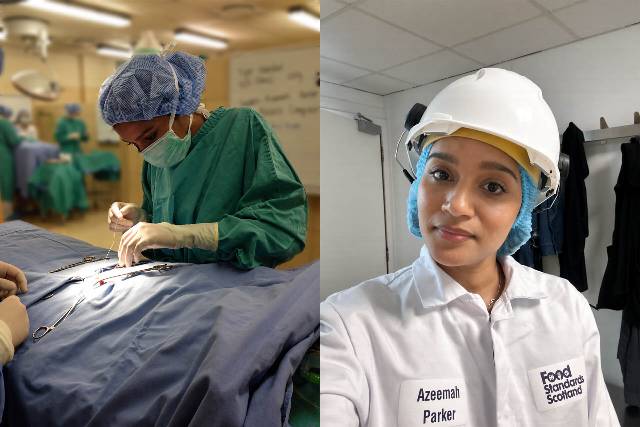 Blog: My career journey, from rural mixed practice to veterinary public health
Veterinary surgeon Azeemah Parker’s career has combined clinical practice, government veterinary work and academia.After studying vete …
Posted
Yesterday
Blog: My career journey, from rural mixed practice to veterinary public health
Veterinary surgeon Azeemah Parker’s career has combined clinical practice, government veterinary work and academia.After studying vete …
Posted
Yesterday