Students learn from conservation dog demo
Posted 2 April 2014
Watch the video on our YouTube channel.
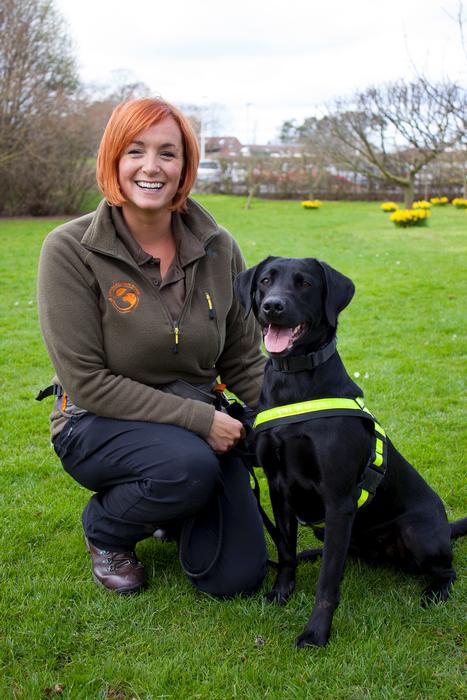
Trained wildlife detection dogs were brought to campus recently to show Harper Adams University students a more creative way to conduct conservation surveys.
Louise Wilson, Director of Conservation Dogs and Wagtail UK Ltd, spoke to students studying the Introduction to Ecology module and gave a live demo of the type of work that her dogs are trained to undertake. This includes sniffing out anything from bats to great crested newts.
Senior Lecturer, Nicky Hunter, heard about Louise whilst working with the Shropshire Mammal Group. Nicky said: “Louise’s talk and demo not only highlighted the accurate detection of wildlife in the UK, but also her work in Africa training dogs to detect poaching and illegal trade in wildlife.
“Her visit was both engaging and motivational, and demonstrated the use of highly-trained detection dogs to aid ecologists in survey work and in monitoring plant and animal populations.”
Louise and the team behind Conservation Dogs are qualified handlers and trainers of specialist search dogs, in areas such as explosives, narcotics, live body and tobacco detection.
The dogs trained in wildlife detection can help to support research and monitoring projects, proving an efficient, quick and accurate method as well as being a non-invasive search method capable of detecting animal nests with minimal disturbance to the animals themselves.
FdSc Animal Management and Welfare student, Olly Jenner, 22, from Devon, said: “Louise’s talk and practical on the use of dogs for detection was an eye-opening lecture. Primarily, it demonstrated the amazing applications that a dog’s nose can be used for.
“Louise has a devout affinity for her dogs, of which all have been rescued. Her focus and drive is clearly strong and a sure example of how a human-animal bond can be both a healthy benefit to both parties.”
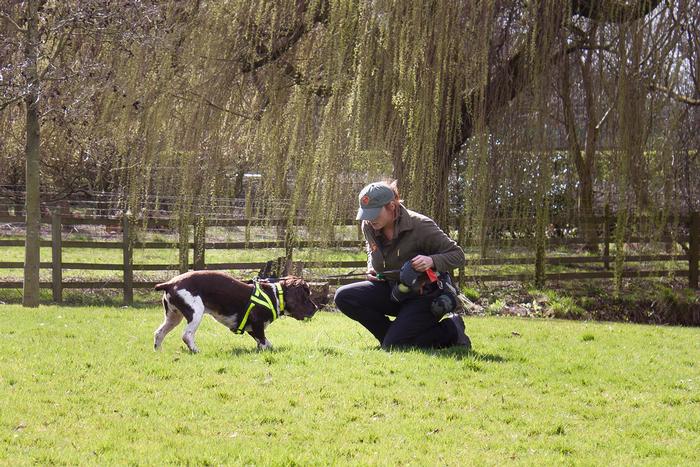
For the demonstration, Louise introduced Twister the Spaniel and Luna and the Labrador. Louise said: “Conservation dogs are an exciting and pioneering way to use dogs in research and I think that it is good to remember that there are more methods out there to conduct wildlife searches, it’s not always down to humans.
“Dogs are non-biased and non-invasive, so I hope that people will be a little more open-minded as to how we can use dogs, not only in conservation, but in other ways to help us learn more about animals.”
Most popular
-
 Harper Adams University and Lincoln University, New Zealand, launch global agricultural futures alliance
17 September -
 Students join 125 years of pioneers at 2026 Graduation ceremonies
16 September -
 Expanded clearing places designed to meet industry challenges
17 August 2022 -
 First Honorary Degrees and Fellowships to be bestowed as Harper Adams University marks 125th year
10 September -
 Harper Adams University launches free and immediate mental health and wellness support for students
18 September -
 Groundbreaking new study aims to examine neurodivergence in agriculture
7 September