Vital soil research presented at global symposium
Posted Today
“Our long-term experiment provides a unique opportunity to understand how different traffic management and tillage systems influence soil health, crop productivity and farm economics over time."

Vital soil research has been presented at a global symposium held by the United Nations’ Food and Agriculture Organisation.
The FAO is a specialised agency of the UN which leads international efforts to defeat hunger and aims to achieve food security for all.
It held its symposium on soil compaction in Denmark – with researchers from across the globe attending to share research and knowledge, including four from Harper Adams University.
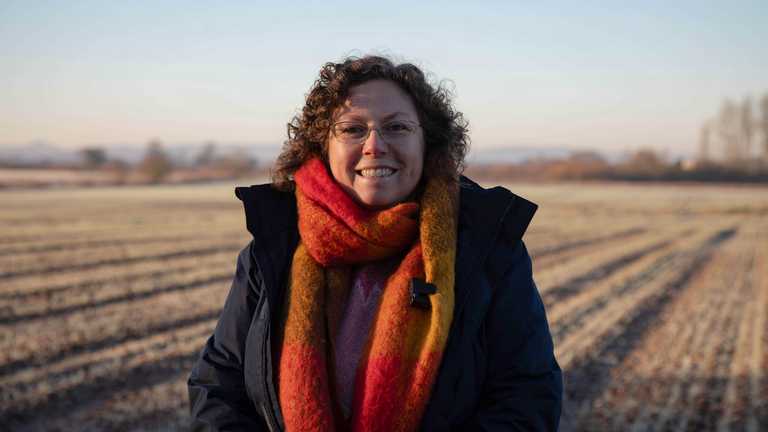
Reader in Soil and Water Management Dr Paula Misiewicz said: “The symposium reinforced how important soil compaction is as a global agricultural challenge - and how much we can benefit from sharing knowledge and experiences across countries.
“It was encouraging to see the range of research being undertaken internationally, from understanding fundamental soil processes to developing practical technologies and management approaches for reducing compaction.”
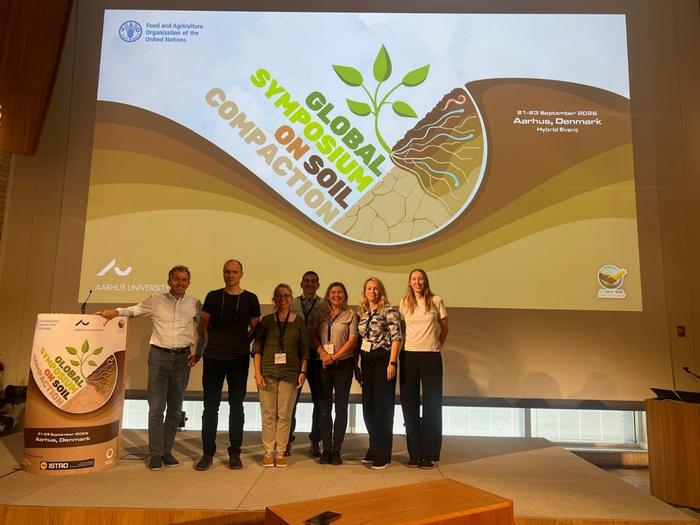
The work presented at the symposium by Dr Misiewicz and three colleagues - Dr Magdalena Kaczorowska-Dolowy, Dr Ana Prada Barrio and Dr Przemek Dolowy – centred on the long-term Traffic and Tillage project which has been underway for a decade and a half.
Dr Misiewicz added “With the continued support of the Douglas Bomford Trust, we have been investigating the effects of agricultural machinery traffic and tillage on soil properties and crop performance at Harper Adams since 2011.
“Our long-term experiment provides a unique opportunity to understand how different traffic management and tillage systems influence soil health, crop productivity and farm economics over time. We were pleased to have the opportunity to share findings from our research with a global audience at the symposium.”
“It was interesting to discuss our findings with researchers working on similar topics in different countries. These discussions gave us an opportunity to compare research approaches, consider different interpretations of our findings and identify areas where further work is needed.
“For me, one of the greatest benefits of attending the symposium was the opportunity to meet and reconnect with researchers from across Europe and beyond.
“Together with my research team, I have been developing international collaborations in soil compaction and traffic management for many years, and events such as this are extremely valuable for maintaining these relationships, exchanging ideas and identifying new opportunities to work together.”
The researchers are now planning a European network focussed on tackling machinery-induced soil compaction – and discussions at the symposium have also inspired a new web-based support tool which they hope will help farmers make better decisions about when to enter their fields and reduce the risk of soil damage.
Speaking after the symposium – which the research team were able to attend thanks to a £4,950 grant from the Douglas Bomford Trust - Dr Misiewicz added: “One of the key messages I took away was the importance of translating scientific findings into solutions that can be used by farmers and the agricultural machinery industry.
“We already have considerable knowledge about the effects of machinery traffic on soils, but there is still a need to improve the adoption of effective prevention and mitigation practices.”
Most popular
-
 Event underlines impact of world-leading specialist institutions
5 November -
 University extends major research partnership with leading firm ABP
4 November -
 PhD student's pride at helping continue University's poultry research tradition
3 November -
 Applications open for prestigious MIBTP PhD scholarships at Harper Adams University
9 November - Lecturer shortlisted for environmental innovation award
Yesterday -
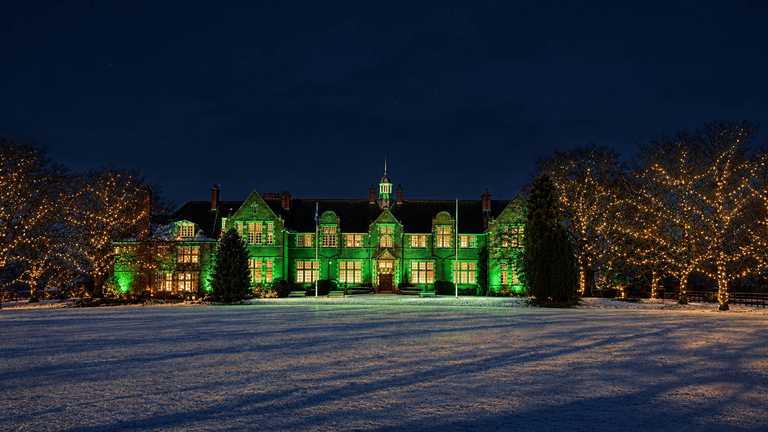 Harper Adams University lights up for 125th anniversary Festive Celebration
28 October