
 Looking back at a remarkable 125th anniversary celebration
Ian Rowley is Harper Adams University's Executive Director for Institutional Impact and Engagement – and had a front-line seat as prep …
Posted 1 October
Looking back at a remarkable 125th anniversary celebration
Ian Rowley is Harper Adams University's Executive Director for Institutional Impact and Engagement – and had a front-line seat as prep …
Posted 1 October
Dr Matthew Back talks biofumigation at Cereals 2019
17 June 2019

Dr Matthew Back, Reader in Plant Nematology, spoke about the science behind using biofumigation to target pests and field crop diseases at Cereals 2019.
During his talk, Dr Back was keen to outline the reasons behind the use of biofumigation, namely a number of chemicals being banned and a general movement towards using a healthier soil. However, biofumigation isn’t a new technique and dates back to use in the 1930s. The process involves pulverising brassica crops like Indian mustard and oilseed radish, and working them back into the soil. These plants contain glucosinolates, a cell bound enzyme called myrosinase and water which, when mixed, produce biocidal compounds such as isothiocyanates that suppress diseases that destroy crops.
As well as outlining the process, he outlined several factors to consider when undertaking biofumigation. These include achieving a high quantity and quality of biomass, the concentration and type of glucosinolates, and the pH of the soil, which ditates the type of volatiles produced.
Biofumigation research undertaken at Harper Adams was also showcased as part of the talk, specifically work based around fighting Potato Cyst Nematodes (PCN) that continue to threaten Britain’s potato crops, stem and bulb nematodes that infect beans, Fusarium pathogens of wheat and the notorious weed, blackgrass. Dr Back was keen to show that, not only is biofumigation proven to help fight PCN, but the factors outlined at the beginning of the talk have a dramatic effect on the relative success of the process.
Dr Back concluded that the future is bright for biofumigation, stating: “You do need to understand agronomy to maximise the effects of biofumigation and, while biofumigation isn’t a replacement for chemical control, it’s certainly a very useful tool in integrated pest or disease management. It really does depend on what brassica species you are growing but, using plants of Oilseed Radish and Indian Mustard, you could fit this process into a crop rotation.”
Related Posts
Looking back at a remarkable 125th anniversary celebration
Ian Rowley is Harper Adams University's Executive Director for Institutional Impact and Engagement – and had a front-line seat as prep …
Posted 1 October
 Iconic dog trainer Barbara Woodhouse's legacy lives on at Harper Adams through her great-grandson
For many, Barbara Woodhouse has been a household name over the years for her approach to training our beloved four-legged friends.The …
Posted 30 September
Iconic dog trainer Barbara Woodhouse's legacy lives on at Harper Adams through her great-grandson
For many, Barbara Woodhouse has been a household name over the years for her approach to training our beloved four-legged friends.The …
Posted 30 September
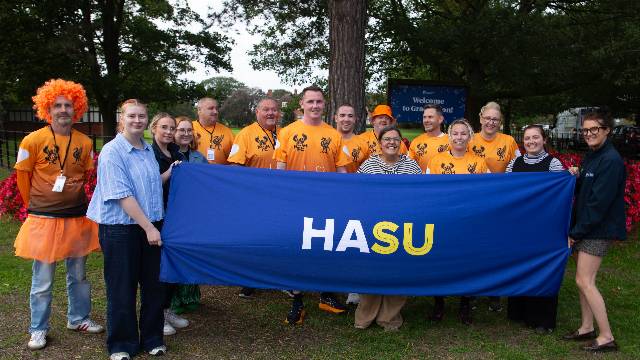 University welcomes awareness-raising meningitis B run
A runner who undertook a 100-mile challenge between two football stadiums to raise awareness of meningitis B has completed his trip.Sha …
Posted 22 September
University welcomes awareness-raising meningitis B run
A runner who undertook a 100-mile challenge between two football stadiums to raise awareness of meningitis B has completed his trip.Sha …
Posted 22 September
 Student Choice Awards 2026 celebrate the best in learning and teaching support
An annual awards ceremony to celebrate excellent learning and teaching support has been held at Harper Adams University.The awards are shape …
Posted 9 September
Student Choice Awards 2026 celebrate the best in learning and teaching support
An annual awards ceremony to celebrate excellent learning and teaching support has been held at Harper Adams University.The awards are shape …
Posted 9 September