

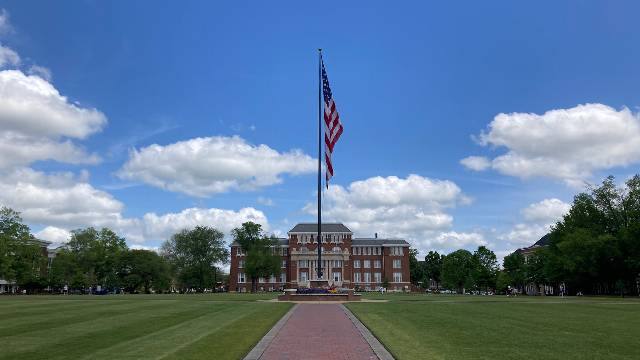
 Agricultural Autonomy Institute joins Harper Adams University's 125th anniversary celebrations
A leading American expert in agricultural autonomy has paid tribute to Harper Adams University as it marks its 125th anniversary.Dr Alex Tho …
Posted 22 October
Adapting to a different kind of research with Femi
18 June 2020

The adaptability of Harper students has always been clear to see, working between classroom and workplace to put into practise all the skills they have learnt over the course of their studies. Likewise, adapting to the changes and challenges of Covid-19 has seen everyone across campus working in new ways, continuing to do their best despite the difficulties facing them.
Femi Adekoya is one such student, working to complete his master’s in Integrated Pest Management. Rather than completing his work in the field, Femi is completing an evidence-based review for his project.
Femi shared his prior plans before explaining how he is now approaching his work, saying: “Previously, before the lockdown as a result of the pandemic, I planned to investigate the effect of chitin amendments on egg viability and root invasion of potato cyst nematode (PCN) on potato. This lab-based research was aimed to elucidate the efficacy of chitin-based biostimulants in the control of PCN soil population and their influence on potato plant health. Although I had initiated the laboratory work, I had to stop the study in line with the lockdown measures.
“Nevertheless, I was advised to conduct a systematic literature review in line with previous research for my MRP. Although I have not carried out a desk study of this sort before, or have experience in its processes, through the guidance of my supervisor Dr Matt Back and Dr Nicola Randall, I have found it an interesting one. Simply, I will be carrying out evidence-based research to ascertain the effect of chitin-based biostimulants in the management of plant pathogenic nematodes and on plant growth.
“This systematic literature review and meta-analysis outcome will be instrumental to policymakers to have a comprehensive, objective, and transparent summary of relevant existing scientific reports on the topic, thus allowing them to decide whether to approve chitin-based biostimulant as a viable plant protection substance and consequently, offering growers more choice of non-chemical control options available to them.”
Although Femi has completed all his taught learning, working online has been a learning curve. He commented: “The transition somehow seems strange at first as the traditional physical meetings and library services have now been moved completely online. I am someone who still prefers the use of hardcopy materials over virtual, however, I am adapting considerably to the recent change.”
Femi joined Harper Adams in 2019 and has not looked back. He shared: “I consider Harper Adams University to be an ideal university to receive practical-based learning for its excellence in administering viable knowledge to students. Its connection with the industry is commendable and helps to prepare its students for the world of work.
“I was also inspired to choose Harper Adams as a destination of study being an international student, because I have read of its pacesetting innovations. For example, the Hands-Free Hectare farm project and other wonderful research work from its stable. And to add, the fact that it is one of the leading agricultural universities in the UK has been something of pride for me.”
As an advocate for his subject, as well as studying at Harper in general, Femi offered his advice. He said: “My advice to students is to maintain an open mind to learn, unlearn, and to relearn in the course of studying here.
“Although the academic standard is high and seemingly tough here, it should be considered as preparing you for life after university. Students should, however, be ready to maximize the resources the university could offer at any point in time.”
As Femi’s studies come to a close with Harper, we asked where his future lay in the industry. His ambitions were clear: “It is my career goal to be an astute professional in agriculture, contributing to global food security in the context of a sustainable environment through technological innovations and proven scientific knowledge.
“I envisage a future in agricultural research allowing me to contribute significantly to plant health solutions and promoting sustainable agriculture that would meet the demand of the world’s growing population most especially in sub-Saharan Africa.”
If you are inspired by Femi’s research, you can find out more about our master’s course in Integrated Pest Management here. For further information about our postgraduate taught courses, click here.
Related Posts
Agricultural Autonomy Institute joins Harper Adams University's 125th anniversary celebrations
A leading American expert in agricultural autonomy has paid tribute to Harper Adams University as it marks its 125th anniversary.Dr Alex Tho …
Posted 22 October
 Sky's the limit: Helen joins MP's fundraising parachute jump
A charity skydive by a Harper Adams University Business Development Consultant has helped raise more than £16,000 for a new cancer cen …
Posted 21 October
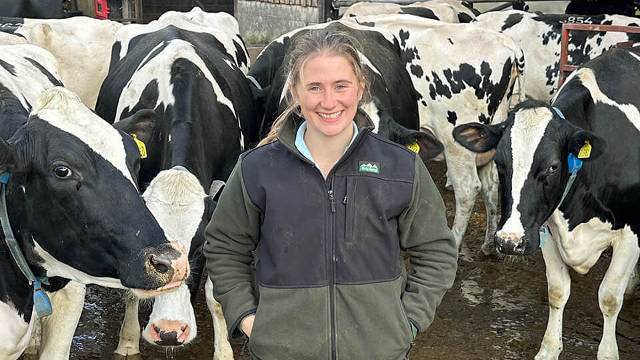 From dairy farm - to farm vet
Growing up on a dairy farm played a huge part in shaping Harriet Brimacombe’s ambition to become a vet. Now, as she prepares to …
Posted 20 October
 Listen: Archers anniversary marked with future of farming discussion on BBC radio
With BBC Radio Four marking the 75th anniversary of the Archers this year, Farming Today has taken the opportunity to look forwards this wee …
Posted 16 October