

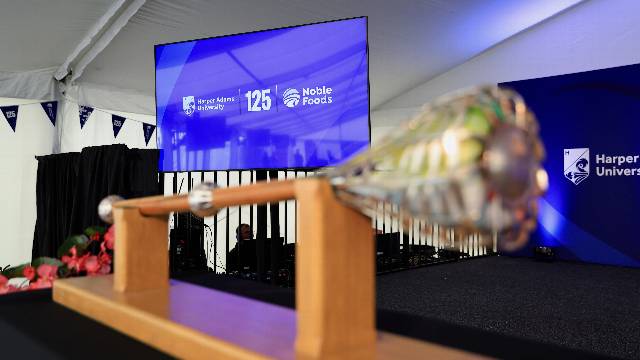
 Looking back at a remarkable 125th anniversary celebration
Ian Rowley is Harper Adams University's Executive Director for Institutional Impact and Engagement – and had a front-line seat as prep …
Posted 1 October
Looking back at a remarkable 125th anniversary celebration
Ian Rowley is Harper Adams University's Executive Director for Institutional Impact and Engagement – and had a front-line seat as prep …
Posted 1 October
Zoology students have been assessing the microplastic content in sand samples with Alex Miles as part of the courses’ Aquatic Ecosystems module.
24 February 2022

Zoology students have been assessing the microplastic content in sand samples with Alex Miles as part of the courses’ Aquatic Ecosystems module.
Alex Miles, Aquaculture facility manager, discusses the importance of such experiments here:
Assessing #microplastic in sand samples - part of the Aquatic Ecosystems module for students on the #Zoology courses @HarperAdamsUni with Alex Miles #microplastics #handsonscience pic.twitter.com/5tjk0dylwZ
— John Reade (@DrJohnReade) February 15, 2022
“Plastics are an integral part of our everyday existence, and are an extremely practical material for a seemingly endless list of applications and products.
Many human activities result in plastic being released into the environment. These can include anything from washing synthetic clothing, to accidental loss of commercial fishing gear at sea.
Plastic’s longevity causes widespread issues and their residual presence in smaller sized particles often referred to as “microplastics” when under 5mm in size.
Massive quantities of plastic materials, much of which is in the form of microplastics, are discharged into the marine environment on a daily basis and evidence suggests that concentrations of microplastics in the environment are increasing.
Other studies have found increasing concentrations in plastic ingested by marine organisms such as fish.
Plastics can eventually break down into nanoplastics, which are far smaller (nanometres in size as opposed to millimetres) but are still harmful to the environment and marine wildlife.
This particular practical exercise gives an insight into citizen-science friendly methods of determining the microplastics content of different samples.”
Want to take part in hands-on activities like this one, then book onto our next Open Day!

Related Posts
Looking back at a remarkable 125th anniversary celebration
Ian Rowley is Harper Adams University's Executive Director for Institutional Impact and Engagement – and had a front-line seat as prep …
Posted 1 October
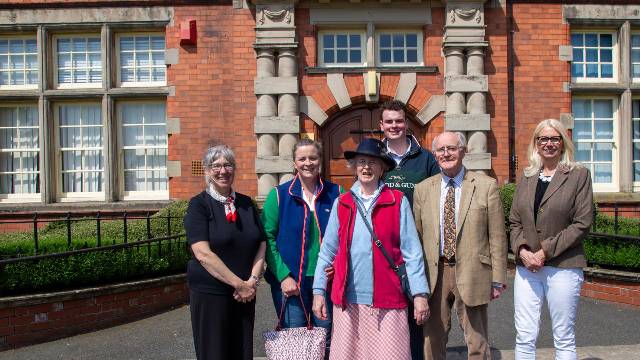 Iconic dog trainer Barbara Woodhouse's legacy lives on at Harper Adams through her great-grandson
For many, Barbara Woodhouse has been a household name over the years for her approach to training our beloved four-legged friends.The …
Posted 30 September
Iconic dog trainer Barbara Woodhouse's legacy lives on at Harper Adams through her great-grandson
For many, Barbara Woodhouse has been a household name over the years for her approach to training our beloved four-legged friends.The …
Posted 30 September
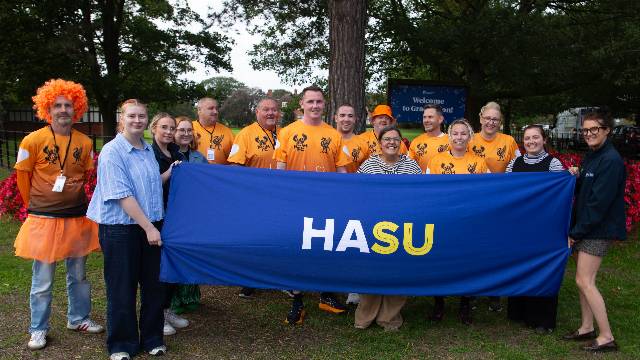 University welcomes awareness-raising meningitis B run
A runner who undertook a 100-mile challenge between two football stadiums to raise awareness of meningitis B has completed his trip.Sha …
Posted 22 September
University welcomes awareness-raising meningitis B run
A runner who undertook a 100-mile challenge between two football stadiums to raise awareness of meningitis B has completed his trip.Sha …
Posted 22 September
 Student Choice Awards 2026 celebrate the best in learning and teaching support
An annual awards ceremony to celebrate excellent learning and teaching support has been held at Harper Adams University.The awards are shape …
Posted 9 September
Student Choice Awards 2026 celebrate the best in learning and teaching support
An annual awards ceremony to celebrate excellent learning and teaching support has been held at Harper Adams University.The awards are shape …
Posted 9 September