

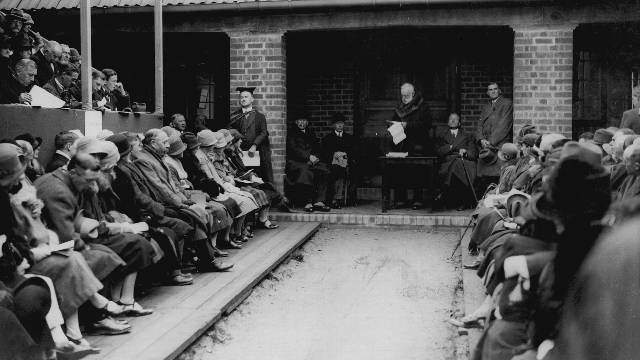
 The National Institute of Poultry Husbandry at 100 - rediscovering an eye witness account
To mark the Centenary of the opening of National Institute of Poultry Husbandry at Harper Adams, we’re sharing a contemporary acc …
Posted 3 November
Mosses site visit helps students consider the importance of our peatlands
19 January 2023

Site visits are a feature of many of our courses – and taking learning out of the lecture theatre gives our students a fresh perspective.
In this guest blog, Lecturer in Wildlife Conservation, Environmental Land Management and Zoology Dr Julia Casperd explains how a visit to Whixall Moss, on the Shropshire/ North Wales border, not only helped to explain the importance of peatland sites to the environment – but also to demonstrate, physically, how they have been affected by human activity.
First year Wildlife Conservation, Zoology and Environmental Land Management students used a visit to a renowned site on the border of Shropshire and North Wales to consider how the management of such areas impacts the world.
During their visit, they considered the fact that peatlands cover less than three per cent of the earth’s surface - but that they store as much carbon as all of the world’s forests combined.
As they stood on the Mammoth Tower at Whixall Moss. looking out over the magnificent landscape that is the Marches Mosses - managed by Natural England and Cyfoeth Naturiol Cymru / Natural Resources Wales - they considered the fact that the height of this tower represents how much peat has been lost in the last 150 years – a staggering five metres.
As they heard about the important assemblages of plants and animals on this raised bog, they considered the fact that it takes 5,000 years to form that five metres of peat.
As they considered the sphagnum moss and the extensive bunding at the site – which is used to retain the water - they also considered the impact of climate change and global warming on the site’s hydrology and the degradation of this peat.
They also considered the impact of climate change on the bog’s biodiversity, especially in relation to the dominance of Molinia, a kind of grass - which is a key factor causing wildfires.
And finally, they considered the fact that recent modelling by Professor Fred Worrall has demonstrated the Meres and Mosses have capacity to sequester and store a further 75% of carbon.
It is worth considering that the consideration of this bright younger generation is key to world health and our future.
A big thank you must go to Steve and Nathan from Natural England and their placement students Hazel and Paddy – a Harper Adams student himself - for talking us through the successes of the LIFE peatland restoration project.
 Students and Harper Adams staff at the Mammoth Tower at Whixhall Moss - whose size represents the amount of peat lost in the past 150 years.
Related Posts
The National Institute of Poultry Husbandry at 100 - rediscovering an eye witness account
To mark the Centenary of the opening of National Institute of Poultry Husbandry at Harper Adams, we’re sharing a contemporary acc …
Posted 3 November
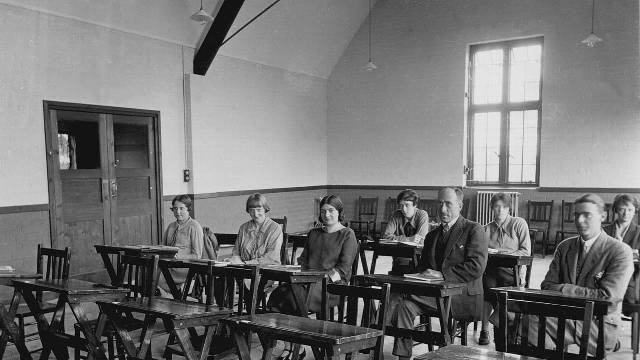 'More than 100 years of expertise' - a brief history of poultry at Harper Adams
Dr Stephen Mansbridge is Reader in Animal Science and Bioinformatics at Harper Adams University as well as Director of the Animal Science Re …
Posted 3 November
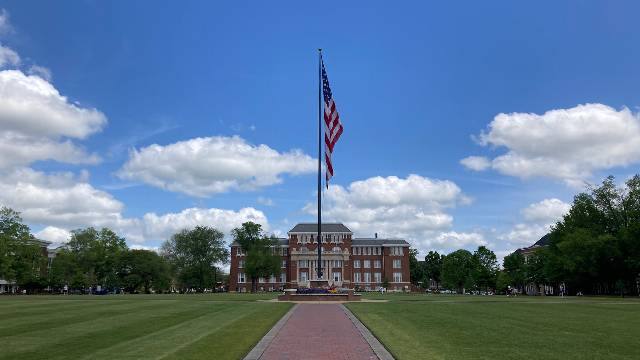 Agricultural Autonomy Institute joins Harper Adams University's 125th anniversary celebrations
A leading American expert in agricultural autonomy has paid tribute to Harper Adams University as it marks its 125th anniversary.Dr Alex Tho …
Posted 22 October
 Sky's the limit: Helen joins MP's fundraising parachute jump
A charity skydive by a Harper Adams University Business Development Consultant has helped raise more than £16,000 for a new cancer cen …
Posted 21 October