

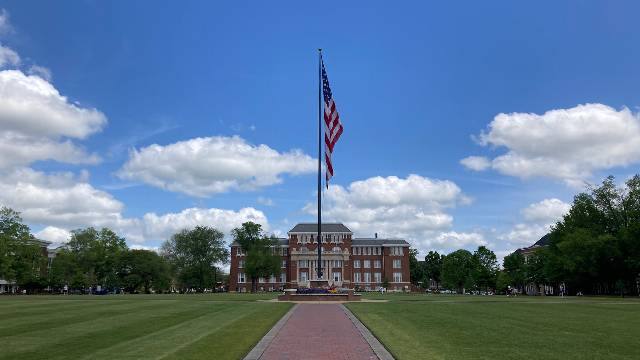
 Agricultural Autonomy Institute joins Harper Adams University's 125th anniversary celebrations
A leading American expert in agricultural autonomy has paid tribute to Harper Adams University as it marks its 125th anniversary.Dr Alex Tho …
Posted 22 October
New findings from a multi-million pound research project into new approaches to slug management have been featured on BBC radio.
Strategies Leading to Improved Management and Enhanced Resilience Against Slugs (SLIMERS) is a three-year £2.6m research project involving more than 100 UK farms and six industry partners, funded by Defra’s Farming Innovation Programme which is delivered by Innovate UK.
Keith Walters, Professor of Invertebrate Biology and Integrated Pest Management at Harper Adams University, is one of the key academics working on SLIMERS, alongside project lead Tom Allen-Stevens of the British On-Farm Innovation Network (BOFIN).
Both spoke to BBC Radio Shropshire’s Adam Green this morning to explain more about the project – and its latest findings.
Tom said: “Slugs are an enormous problem for farmers – it costs them about £43 million every year – and we have only got one form of control, that’s chemical slug pellets, ferric phosphate, that farmers apply – very liberally, everywhere.
“What we are trying to prove – and this is the gem of Keith’s research – is that slugs gather in patches, so we have been working with 27 farmers across the UK this past year, to put Keith’s research to the test.”

Asked to explain how the project has been progressing this year, Keith said: “Very well indeed, thanks to the farmers!
“I would stress that it’s entirely down to the amount of data and hard work they have been doing that we have made progress this year.
“As Tom says, the slugs aren’t evenly distributed across the field – they occur in patches with higher numbers in a sea of lower numbers.”
Professor Walters explained how the research aimed to discover if these patches were treated with control agents, sufficient control of the slugs could be achieved with far less pesticide applied – and with resulting environmental and economic advantages.
He added: “To do this, there is a whole range of things we have had to have tested – I’m not going to go into them all, it would take all morning and all your listeners would have disappeared by the time I’d got two minutes into it!
“However, some of the key ones are – we had to answer the question, which we have done already now, ‘do patches occur in all fields?’ and yes, they do; ‘are they stable over time? – in other words, once formed, do they remain in the same place throughout the slug damage window, giving us a target to aim at?’ and the answer is yes!
“We have even – and this always amuses people – identified the behavioural changes that occur when a slug meets other slugs, which results in the formation and the stability of these patches, and so we know they do make good targets.
“The one thing we know is the big challenge is predicting in advance where patches will form so we can identify the target – and that’s what farmers have been doing for us.”
Get involved and learn more about the project - https://t.co/1x1k5ASVIO https://t.co/WUIdzEpjNt
— SLIMERS (@slimersproject) July 11, 2024
The team are now appealing for more people to become Slug Scouts and send slugs to them through the post to help BOFIN’s research into slug-resistant wheat– find out more about how to apply here.
Tom added: “The slugs get a really good life. It's fine to send them through the post, as long as you don't do so on a Thursday or Friday.
"Once they arrive at the lab, then they're treated to the most delicious organic lettuce while they're waiting to take part in the scientific tests."
To listen back to the whole interview, click here (the piece starts at 2hrs, 25 min 50 seconds in.)
Related Posts
Agricultural Autonomy Institute joins Harper Adams University's 125th anniversary celebrations
A leading American expert in agricultural autonomy has paid tribute to Harper Adams University as it marks its 125th anniversary.Dr Alex Tho …
Posted 22 October
 Sky's the limit: Helen joins MP's fundraising parachute jump
A charity skydive by a Harper Adams University Business Development Consultant has helped raise more than £16,000 for a new cancer cen …
Posted 21 October
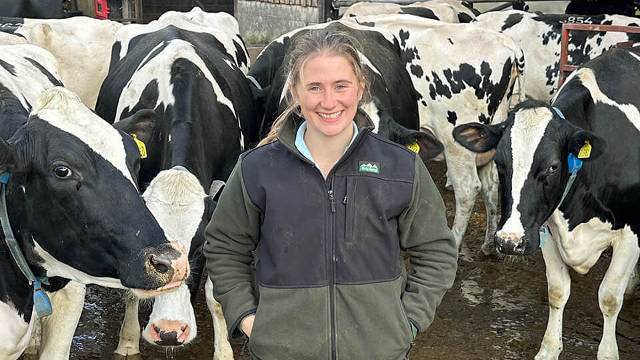 From dairy farm - to farm vet
Growing up on a dairy farm played a huge part in shaping Harriet Brimacombe’s ambition to become a vet. Now, as she prepares to …
Posted 20 October
 Listen: Archers anniversary marked with future of farming discussion on BBC radio
With BBC Radio Four marking the 75th anniversary of the Archers this year, Farming Today has taken the opportunity to look forwards this wee …
Posted 16 October