

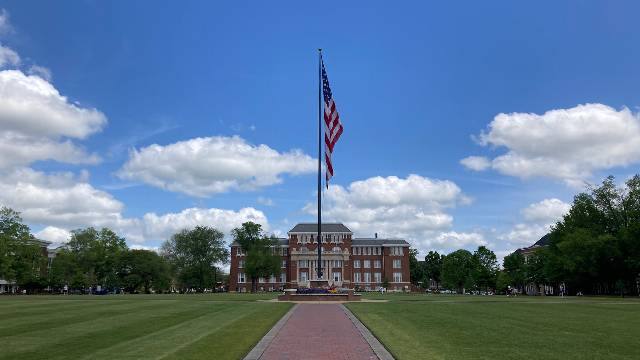
 Agricultural Autonomy Institute joins Harper Adams University's 125th anniversary celebrations
A leading American expert in agricultural autonomy has paid tribute to Harper Adams University as it marks its 125th anniversary.Dr Alex Tho …
Posted 22 October
A leading academic from Harper Adams University has written for Farmer’s Weekly about his visit to the 2024 United Nations Climate Change Conference.
The Conference – also known as the 29th Conference of the Parties, or COP29 - was held in Azerbaijan last year and Professor Michael Lee, Deputy Vice-Chancellor at Harper Adams, was among the very few delegates from UK farming circles who were handed invitations.
In a piece for Farmers’ Weekly’s Transition series, Professor Lee and NFU climate change adviser Dr Ceris Jones set out some of the key points that could have an impact on the future of UK farming.
Visit the Transition content hub to find out more about the Farmer's Weekly series.

$300bn dollar deal
A deal was struck – hailed as a breakthrough agreement – on funding measures to respond and adapt to climate change.
The deal will triple the previously agreed goal for finance paid to developing countries, from US$100 billion each year, to US$300 billionn annually by 2035.
But it was not met with universal approval. A number of countries staged a walk-out because they believed the amount was insufficient to tackle the issue.
For its part, the Farmers’ Constituency of the United Nations Framework Convention on Climate Change (UNFCCC) had a mixed opinion.
The constituency represents crop and livestock farmers, horticulturalists and a range of other parties with tree and food production interests.
It was pleased to see protections mentioned for food production within the wording of the deal, echoing the Paris Agreement.
The deal text stated it will “foster climate resilience and low greenhouse gas emissions development in a manner that does not threaten food production”.
But the constituency was disappointed to see that farmers were not specifically listed among other climate-vulnerable groups.
Only about four per cent of global green finance reaches agriculture, with approximatelytwo per cent of that allocated to supporting sustainable livestock (mitigation and adaptation).
Carbon trading rules
Another deal finally agreed at COP29 was on global carbon trading rules.
Importantly, trading deals must now work for farmers in practice, must prioritise farmers’ rights and consider the diversity of farm systems.
Nitrous oxide more pressing
The COP29 talks saw the launch of the Global Nitrous Oxide Assessment of the UN’s Environment Programme (UNEP).
It emphasised the critical nature of the greenhouse gas, which is approximately 220 times more potent as a greenhouse gas than carbon.
It also highlighted the importance for the farming sector to focus on nitrogen use efficiency on farm.
This will become a more pressing issue, not only for climate change, but water quality and farm profitability.
Methane pledge
Building on the COP26 Global Methane Pledge, the emphasis at Baku was on the need to speed up the reduction of emissions across all sectors including transportation, energy, and agri-food as a mechanism to buy time for fossil fuel carbon dioxide emissions.
International plea on agri-food support
Building on agri-food initiatives from COP26-28, the Baku Harmoniya Climate Initiative for Farmers will empower farmers for climate resilience, with a plea for all nations to include agri-food climate support in their nationally determined contributions.
Defra forestry minister Mary Creagh spoke about the legacy of Glasgow COP26 and the commitment of the UK government to support further action at home and abroad.
Co-operation not competition
Co-operation not competition is critical for the future.
In this climate space, farmers organisations from across the world must work together with other allies to ensure that farming’s voice is heard at the highest level of policy-making.
The farmers’ constituency is already at work preparing for policy talks in 2025.
It is preparing its input for the UNFCCC standing committee on Finance’s workshop on accelerating climate action and resilience through funding for sustainable food systems and agriculture.
Closer relationship with farmers
A step forward was emphasised in changing the narrative on agriculture and climate change.
The Intergovernmental Panel on Climate Change, the United Nations body assessing the science related to climate change, signalled its intent to build a much closer relationship with farmers.
This was agreed as the body prepares its next scientific reports, and it aims to get better at communicating the complexity of its science in relation to agriculture.
Related Posts
Agricultural Autonomy Institute joins Harper Adams University's 125th anniversary celebrations
A leading American expert in agricultural autonomy has paid tribute to Harper Adams University as it marks its 125th anniversary.Dr Alex Tho …
Posted 22 October
 Sky's the limit: Helen joins MP's fundraising parachute jump
A charity skydive by a Harper Adams University Business Development Consultant has helped raise more than £16,000 for a new cancer cen …
Posted 21 October
 From dairy farm - to farm vet
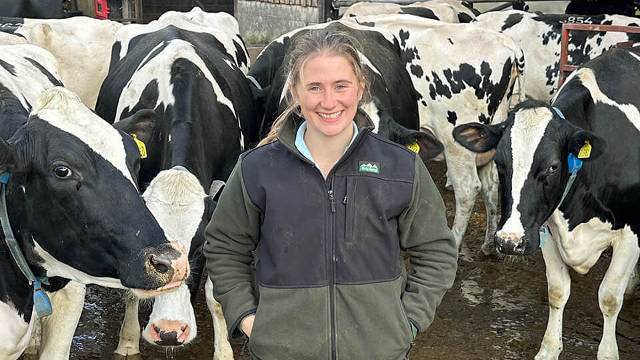
Growing up on a dairy farm played a huge part in shaping Harriet Brimacombe’s ambition to become a vet. Now, as she prepares to …
Posted 20 October
 Listen: Archers anniversary marked with future of farming discussion on BBC radio
With BBC Radio Four marking the 75th anniversary of the Archers this year, Farming Today has taken the opportunity to look forwards this wee …
Posted 16 October