By Dr Ellen Williams, Senior Lecturer in Animal Behaviour and Welfare
Wow, I blinked and March was gone! And not only was March gone, but that also meant the schedule I’d tried my best to adhere to of publishing one blog per month for the Animal Behaviour and Welfare Research Group had just wafted out the window!
I am going to start rolling out the excuses, and then I realised they were all super relevant to this group so I thought maybe the excuses could form the perfect blog post!
Excuse #1 – I missed my plane (this feels like a modern-day dog ate my homework!)
I was lucky enough to take the students on a fieldtrip to South Africa in February (I have also been tied up writing blogs about that – you can read the first one here). We were scheduled to return to the UK on March 8 but the unrest in the Middle East delayed us by a couple of days. That all sounds very lovely and indeed we were in a beautiful place, but the knock-on effect of missing two days of teaching was truly mad. Chaos ensued for me when I returned!
Still, not only did the students have an amazing time on this trip but I also got chatting to a potential collaborator for a project being undertaken by one of my PhD students. Sophie Rabone, first year PhD student, is a fanatic bird ringer and is also doing a PhD investigating behavioural adaptation of European white storks (understanding the links between personality and problem solving abilities, and then considering how this affects reintroduction success). Whilst we were in South Africa I had a fortuitous opportunity to catch up with Dr Kirsty Kyle. Kirsty is a South African based conservationist and she had come onto the camp to show the students bird ringing. During an afternoon bush walk I was talking about Sophie and her PhD when I discovered to my excitement that Kirsty has colleagues who work with white stork and they have white stork who are part of white stork reintroduction programmes. These white stork are being tracked using radiotelemetry which means an opportunity to potentially monitor the relationship between personality and ranging behaviours post release. Fast forward a few weeks and it looks very much like Sophie may have developed a South African collaborator, which is so important in terms of project growth.
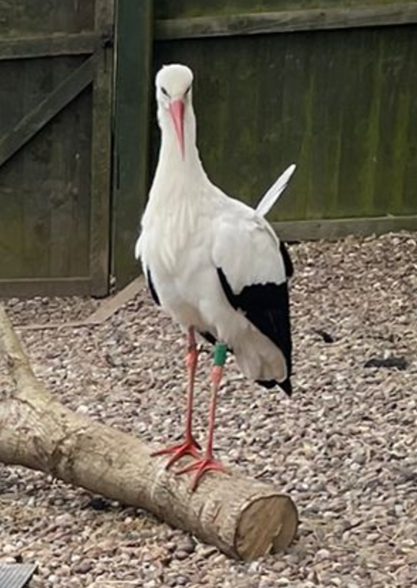
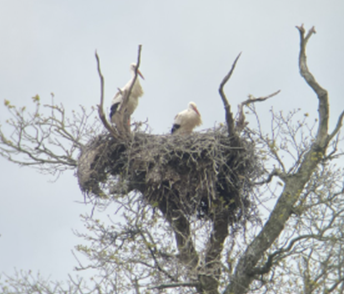
A white stork at Wild Zoological Park in Wolverhampton, one of Sophie’s PhD study sites
A second strand to Sophie’s PhD is understanding stakeholder perception of white storks. Sophie is currently conducting a survey to gather perspectives from a wide range of individuals, including members of the general public, farmers, land managers, policy makers, and conservation professionals. She is looking for people to complete the survey – which is available here.
Excuse #2 – internal conference number 1 – EAZA Welfare Forum, Antwerp Zoo
The European Association of Zoos and Aquariums (EAZA) holds their Welfare Forum every two years. As an Official Advisor for the EAZA Animal Welfare Working Group and a zoo welfare scientist I eagerly await this conference so I am always beyond excited when details are formally released. This year the conference was in Antwerp, hosted at A Room With a Zoo, which is right next door to Antwerp Zoo. The journey to Belgium was *slightly* stressful as I sprinted through Frankfurt airport to get my connection to Brussels. Thankfully I had my running trainers so I bagged an airport personal best - and a pretzel!
A few hours later I had made it. The train pulled into Antwerp station – and wow, what a train station! If you haven’t been I can definitely recommend it! It’s multi-storey which feels quite mad but the architecture in there is just amazing.

The inside of Antwerp train station
I attended the ice breaker on the first evening in A Room with a Zoo, started catching up with old friends and collaborators and started making new! We wrote a blog about it last year but I honestly can’t express how important conferences are for facilitating networking and relationship building.
The next day the conference started and we were certainly well represented – I was co-presenting two oral presentations and a workshop and then my PhD student, Dan Wright - another member of this group - delivered an oral presentation. Professor Francoise Wemelsfelder opened the day with a keynote on qualitative behavioural assessment (QBA), which is a means of understanding and quantifying affective state in animals. Francoise is the founder of QBA and always has really great ideas and thoughts as to how it can develop further.
As a second year PhD student, having an opportunity to present on an international stage is awesome, and Dan had the fairly big task of following Francoise - but at least getting it out the way early means you can enjoy the rest of the conference! Dan did a talk on his PhD research, specifically on developing a taxa level qualitative behavioural assessment tool for mammals, birds and reptiles.
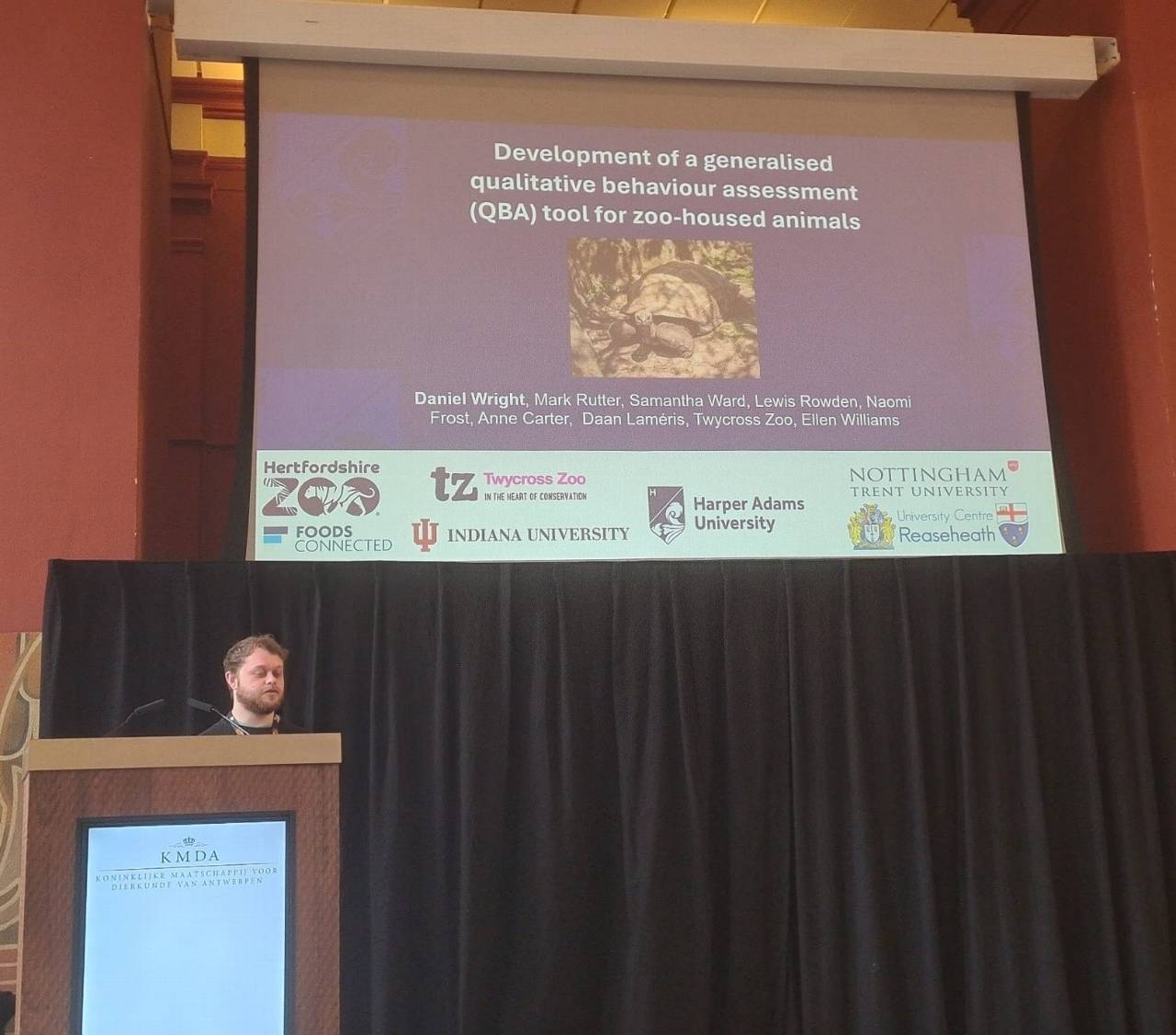
Daniel Wright presenting his PhD work
My two oral presentations were on slightly different but equally important topics – the first one was on how we can (and should) incorporate animal personality and respective individual differences into animal management. This is something I have been working on with Lucy Stratford, from Dublin Zoo, for quite some time. We were accompanied by Elly Neumann from Jerusalem Zoo. We donned our Britney mics and hit the big stage! There were lots of really interesting questions and some great conversations about what an important topic area this is, which is so great to hear!
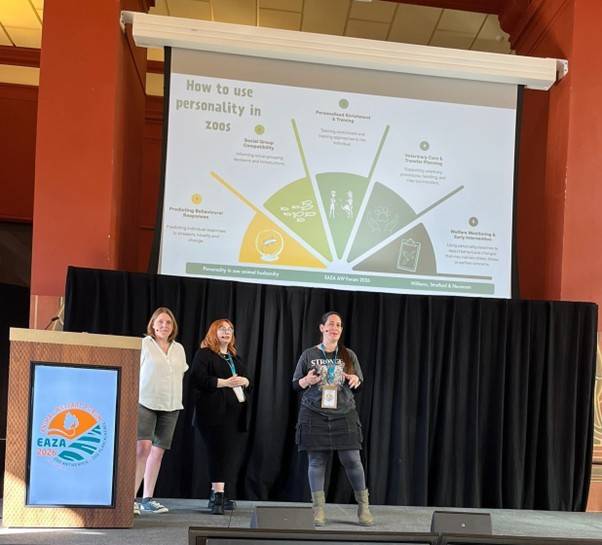
Myself, Lucy Rutherford and Elly Neumann discussing ways in which personality can be used in zoos
My second oral presentation was with Deana Stephens from BIAZA. Deana and I undertook a research project together in 2023, to test the concept of using citizen science in zoos. This project was specifically looking at the potential role of citizen science in zoos as a tool for engaging visitors. This multifaceted project developed into Dan’s PhD. From the initial pilot study we wanted to know: would visitors engage with opportunities to be involved in zoo research, what they knew about animal experiences in zoos, and whether we could use their data to tell us about what the animals are doing. We are currently in the process of publishing this work but Deana and I presented on a section of this which was all about what welfare means to zoo visitors and how as zoo professionals, can we use that information in educating the public.
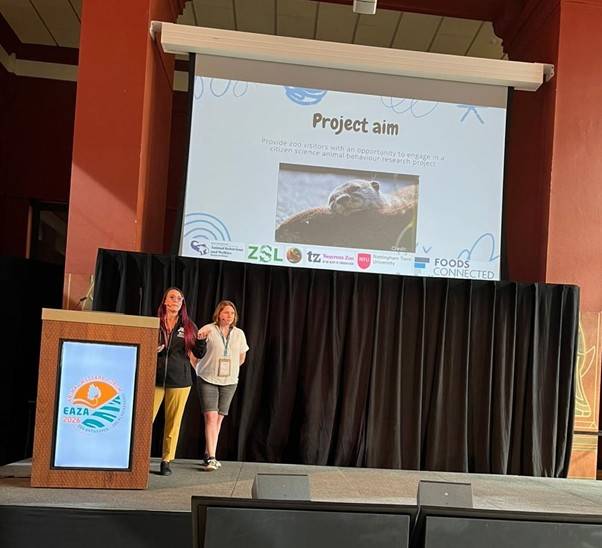
Deana Stephens and myself introducing the aims of our citizen science project
For the workshop I was back to QBA – this time to support Tom Welsh (my PhD student from Nottingham Trent University) and Professor Sam Ward, to host an awesome session on qualitative assessment of giraffe. Tom’s PhD is on human-animal interactions, looking at implications for human health and wellbeing, and animal welfare. As part of this PhD Tom is developing a qualitative behavioural assessment tool for understanding giraffe experiences during feeding experiences.
During the workshop everyone had to watch a series of videos of giraffe and then identify terms that they thought best described the qualitative state of the giraffe. Tom is going to be using these data for his PhD, so much more to come on this topic!
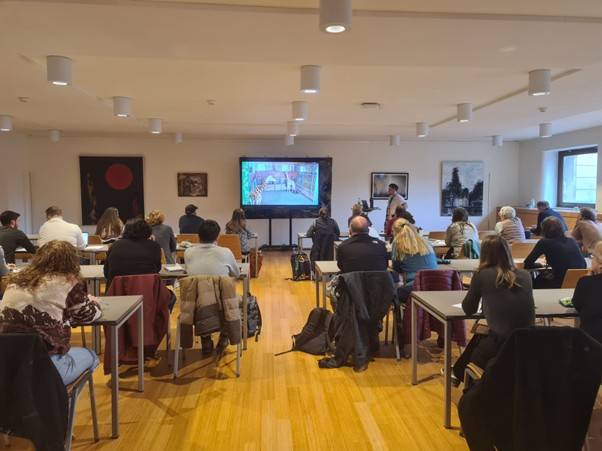
A packed session for Tom Welsh’s giraffe workshop
When I wasn’t presenting or organising workshops I had a great time listening to some really insightful and interesting presentations. I also got to attend a workshop run by Chester Zoo, which was a deep dive into the discussions that have to be had as part of evening events in zoos. It was a really great immersive task where we all had to choose a role and then portray that role in discussions – really great for getting your brain going – the differing priorities and competing interests of those different positions within the zoo (catering manager, commercial director, zoo keeper, welfare scientist), along with the event provider, made for some really interesting discussions!
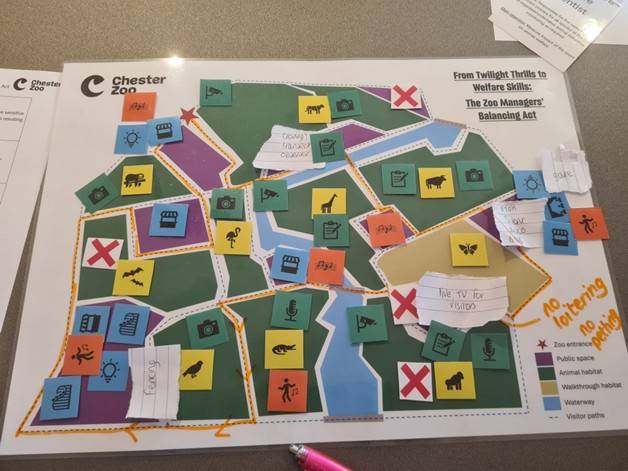
What do you do when there are limited resources and competing priorities? This is a regular challenge in providing evening events within zoos – we broke the rules a bit and added some additional considerations!
Excuse #3 – international conference number 2 – 6th International Meeting on Zoo Research, Conservation and Biodiversity, Serengeti Park
Why attend one conference when you can attend two? Not long after submitting my abstracts to the EAZA Welfare Forum I had an email drop into my inbox… I was being invited to speak at the 6th International Meeting on Zoo Research, Conservation and Biodiversity at Serengeti Park in Hodenhagen, Germany.
The conference theme was ‘Engaging Minds, Saving Species’ and they specifically wanted to highlight conservation through zoo science and public engagement. They had asked if I would speak about the citizen science work I had been doing. I desperately wanted to go and set about seeing if I could make it work.
Thanks to very accommodating teams on both the EAZA and the Serengeti Park sides, I was able to fit both conferences in, spending a fun day travelling across country via the InterCity Express. I squeezed in early breakfast at Antwerp and then arrived at the Serengeti Park just in time for a delicious dinner.
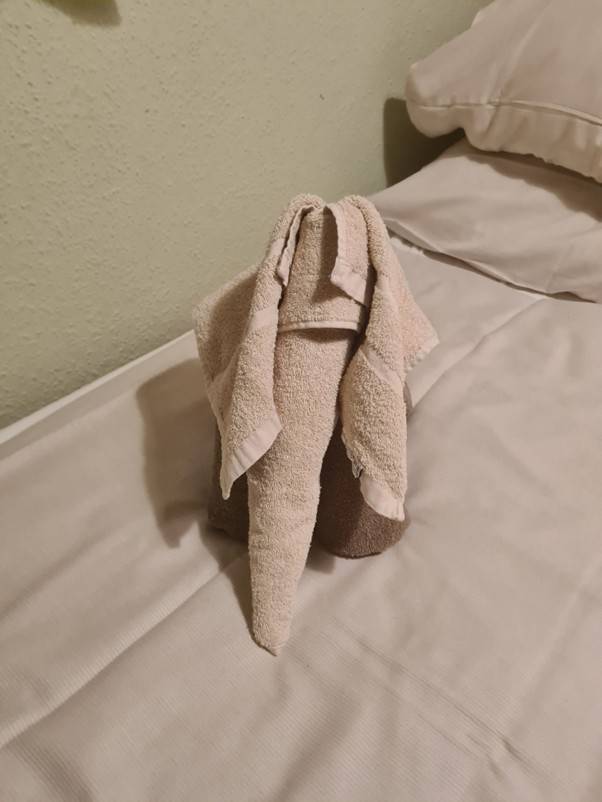
It’s like they knew I was an elephant person… an elephant towel awaited me on my bed!
I was there for one full day of workshops/talks and then a zoo day – fabulous! My invited presentation was on the Friday afternoon so I had an opportunity to enjoy the various things that were on offer in the morning, including a workshop by Pip Dobbs and Dr Sarah Chapman on managing elderly animals. My talk was a slightly extended version of what I had delivered at the EAZA Welfare Forum.
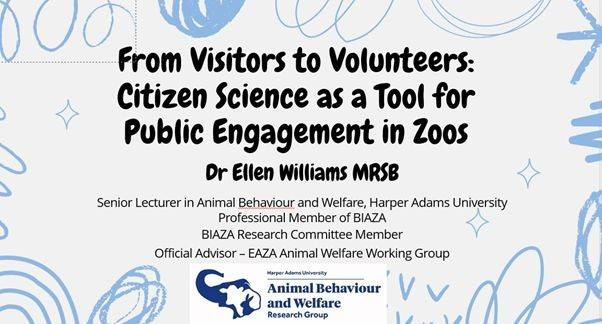
Entitled ‘From Visitors to Volunteers: Citizen science as a tool for public engagement in zoos’, the talk was all about the myriad of ways I believe we can use citizen science in zoos, implications for conservation and challenges with implementing these opportunities. I had some really great conversations with colleagues who had attended the conference and came away with lots of new ideas for how we can overcome some of the difficulties.
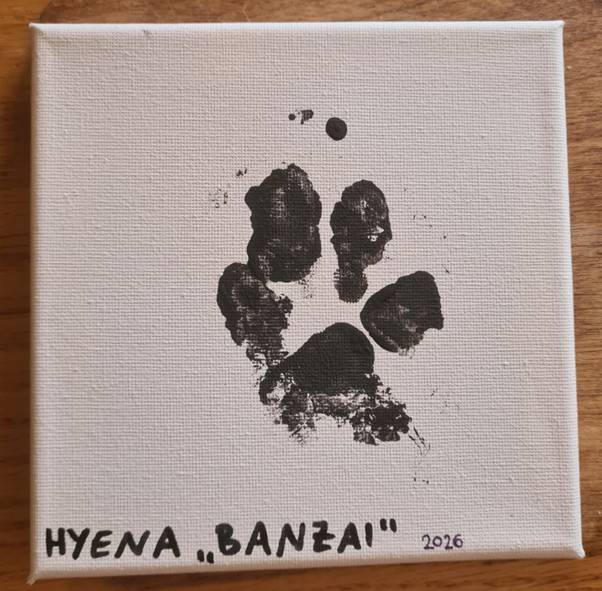
Late afternoon saw a treasure hunt around the zoo (which Pip, Sarah and I won!) before an amazing Gala dinner in the evening. The food was divine! Dinner was followed by a silent auction, during which I bagged myself a hyena footprint. The footprint was from Banzai, which I am reliably informed means 10,000 years of long life!
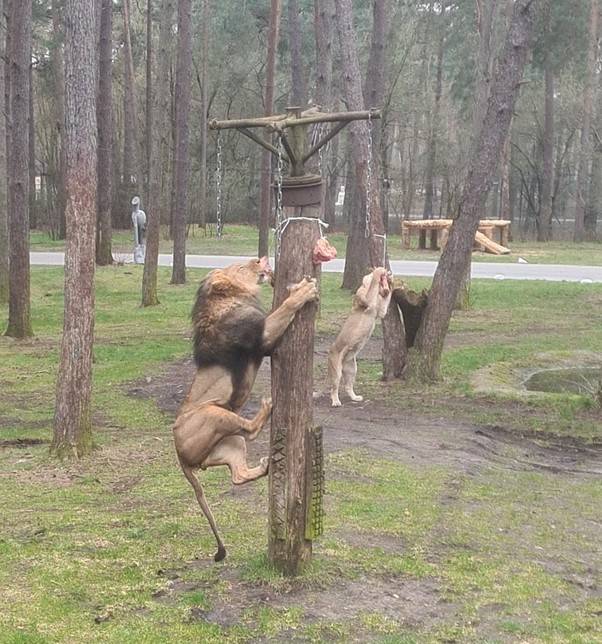
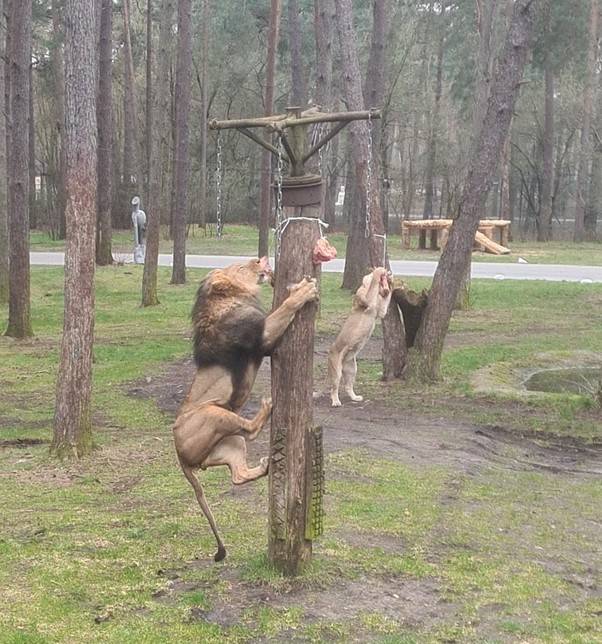
Saturday we had an opportunity to go on a driven tour around the safari section of the zoo - the site is huge! My standout favourite was seeing the lion feed. It is important for encouraging natural behaviours to think carefully about not just what we feed our animals but also how we provide that food, with consideration given to the types of behaviours the animal in question would engage with in the wild. As an obligate carnivore that would normally prey on live vertebrates it can be hard to meet the behavioural needs of a lion. Serengeti Park had a really great set up which encouraged their lion pride to climb trees and jump for large chunks of a carcass. Whilst wild lions wouldn’t normally climb trees, this kind of muscle development is so important in ensuring they stay physically healthy, and provision of carcasses brings multiple benefits.
I spent the afternoon strolling around the park before heading home on Sunday, ready to bounce back to work on Monday! Completely exhausted but in the best kind of way. I am grateful for having these opportunities and was delighted to represent the Harper Adams University Animal Behaviour and Welfare Research Group on the international stage, forging new collaborations which will hopefully lead to the development of even more exciting and impactful research.

 Harper Adams colleagues forge research links with Halesowen College
Four members of the Animal Behaviour and Welfare Research Group (Dr Holly Vickery, Dr Ellen Williams, Jen Sadler and Alice King) had an exci …
Posted 22 June
Harper Adams colleagues forge research links with Halesowen College
Four members of the Animal Behaviour and Welfare Research Group (Dr Holly Vickery, Dr Ellen Williams, Jen Sadler and Alice King) had an exci …
Posted 22 June