In this guest blog, first year BSc (Hons) Wildlife Conservation and Ecology student, Kai Sweet, tells us about his time at Harper Adams so far, including what he discovered on his first bat survey experience at Caynton Gorse Woodland, a nature reserve local to the university.
Starting university felt like stepping into a whole new world, exciting, overwhelming, and full of possibilities. Looking back on my first year, I’ve realised it wasn’t just about lectures and assignments; it was about growth, independence, and finding my place.
Lectures have been engaging and I’ve gained a greater understanding of conservation and especially the challenges we face today. I also see the importance of sustainability and how we can improve our future.
The highlights include the field trips and the practical sessions we have had; these sessions have taught us the skills and knowledge we will need to be successful in the future and help us secure a career.
Using what I've learned already, I did my first bat survey in 2024 using bat detectors to find and monitor three species of bats along a waterway. This was with my local wildlife group, and I have volunteered with them ever since on various projects to date.
Bats are important species for the UK, and are key for pollination, seed dispersal, and controlling insects that are pests to food crops. There are 18 native bat species in the UK, five of which in the UK are in decline, and four at high risk of national extinction.
All species are protected in the UK, so it is important to monitor them to know where they forage, migrate, or roost to protect them and inform planning or conservation decisions.
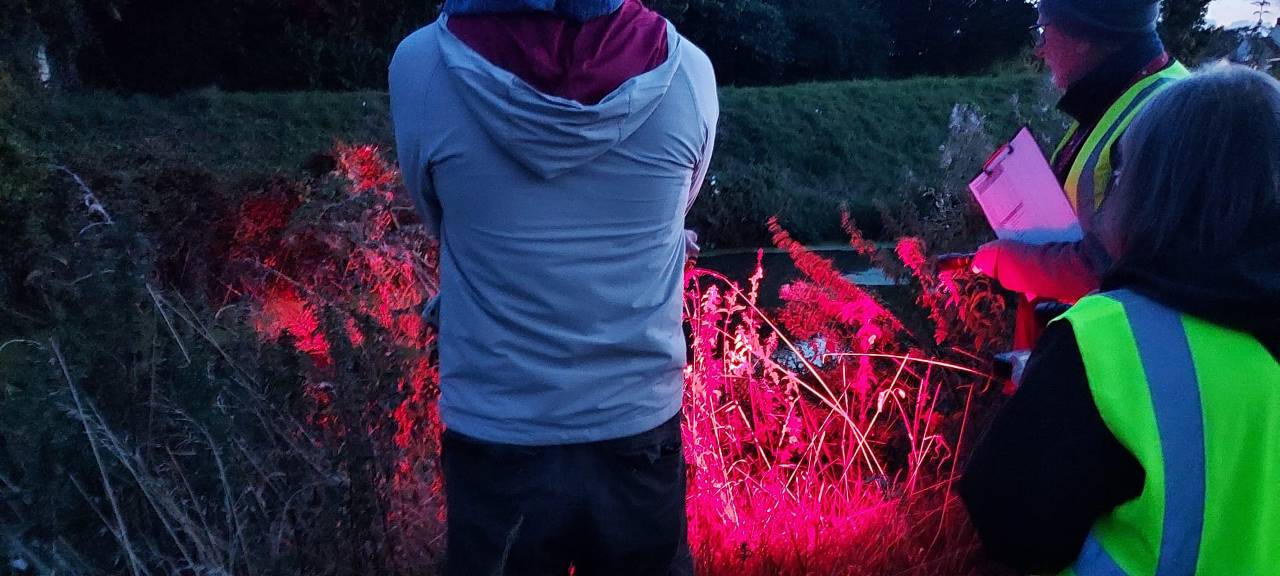
I carried out three sunset bat surveys just outside of Caynton Gorse Woodland in Newport, a nature reserve local to Harper Adams as part of the National Bat Monitoring Programme (NBMP). I was aware of bats being in this area, but couldn't find any information or previous records, therefore recording here would be beneficial to see what species were in the area.
Humans have a hearing range from 20 Hz to 20 kHz, meanwhile bat calls can range from 18 kHz to 110 kHz. Therefore, I used a heterodyne bat detector - a device that listens to the bat calls in the frequency range selected, then converts it to a frequency that we can hear - in order to hear and identify the species of bat by the sounds of their calls and their frequencies.
In my first survey, I recorded two species of bat; a Noctule, and Common Pipistrelle. These two bats are easy to differentiate as they have completely different frequency ranges and their calls are easy to tell apart.
At any one time, I saw a total of four bats. It is difficult to tell how many individuals I saw as they like to forage in the same area in circles, or back and forth along hedge and tree lines.
Common Pipistrelle foraging nearby, which calls at a typical frequency of 45 kHz.
In my second survey, I recorded three species in total, the third being a Soprano Pipistrelle. I personally love Soprano Pipistrelles – they are smallest UK bat species, typically weighing in between 3-8 grams!
Sopranos can be challenging to identify to a beginner with a heterodyne, as they sound very similar to Common Pipistrelles, but produce just a slightly higher frequency of 55kHz. They also sound slightly different, with a "wetter" sounding click compared to the Common Pipistrelle.
Whilst I was unable to get a recording of this, I was, however, able to capture a Noctule call, and you can really see the difference between this call compared to a Pipistrelle species. Noctules are considered the largest bat species in the UK, weighing in between 18 and 40 grams – a big contrast to the Soprano!
In my final survey, it was quite a busy night with over 80 calls! I encountered both Pipistrelles and Noctules throughout the hour and I was able to record on video a Soprano call, recording at approximately 55kHz, followed by a Common Pipistrelle call at approximately 45kHz.
It may be difficult to tell the difference, but you notice how the call becomes deeper or louder when it hits the approximate frequency for each species. This is called the "peak frequency", or when the sound is at its highest energy.
I also detected a bat I haven't detected before. This bat sounded like a Pipistrelle, and had a frequency of about 35 kHz, so I believe it was a Nathusius' Pipistrelle, though I was unable to identify the peak frequency quick enough for the call.
The other possibility was a Serotine; however, it did not sound like the Serotines I have recorded previously as it had a regular call pattern. This may be an exciting find, so I am strongly considering going back with more recording equipment to determine their presence officially.
Overall, I recorded a total of four species over my three surveys and recorded a total of 159 calls, averaging about one call per minute.
I noticed both Pipistrelle species tended to forage locally up and down the track, hence why I likely recorded them the most. Sopranos also like areas with water, so the pond must be a feature they visit regularly for the insects.
With the Noctules, they tend to leave the earliest, and fly high over open areas, so I likely recorded them leaving their roost in the woodland to forage elsewhere over arable fields. It may be interesting to do a sunrise survey at this location as well to determine how many are coming back to roost.
The Nathusius' Pipistrelle like to stay near freshwater areas or woodland edges, making Caynton Gorse a potential habitat, but as I only recorded one call, I would like to revisit this to explore it further and determine if they are present in the woodland.
I'd be interested to repeat this again to see if there is variation in the future, but also I'd love to use an acoustic bat detector to see if I'm missing any species that come out later at night, such as Horseshoe Bat species or any Myotis species. Acoustic monitors also record over a longer period of time, recording multiple days, weeks, or even months, so you're able to see variation over the seasons or weather conditions over a site.
I’d encourage anyone to get involved in supporting bats. I’d definitely suggest joining the National Bat Monitoring Programme and the Bat Conservation Trust, as they have numerous surveys to suit your level, from beginner to licensed bat surveyor, as well as the opportunity to volunteer, fundraise, or attend other events.
The Volunteer Bat Care Helpline is also run by Bat Conservation Trust, so you can help people who have found stranded or injured bats and connect them with bat carers.
By volunteering with your local bat or wildlife group like I did, you can make connections and friends along the way whilst learning a wealth of knowledge about your local area and community.
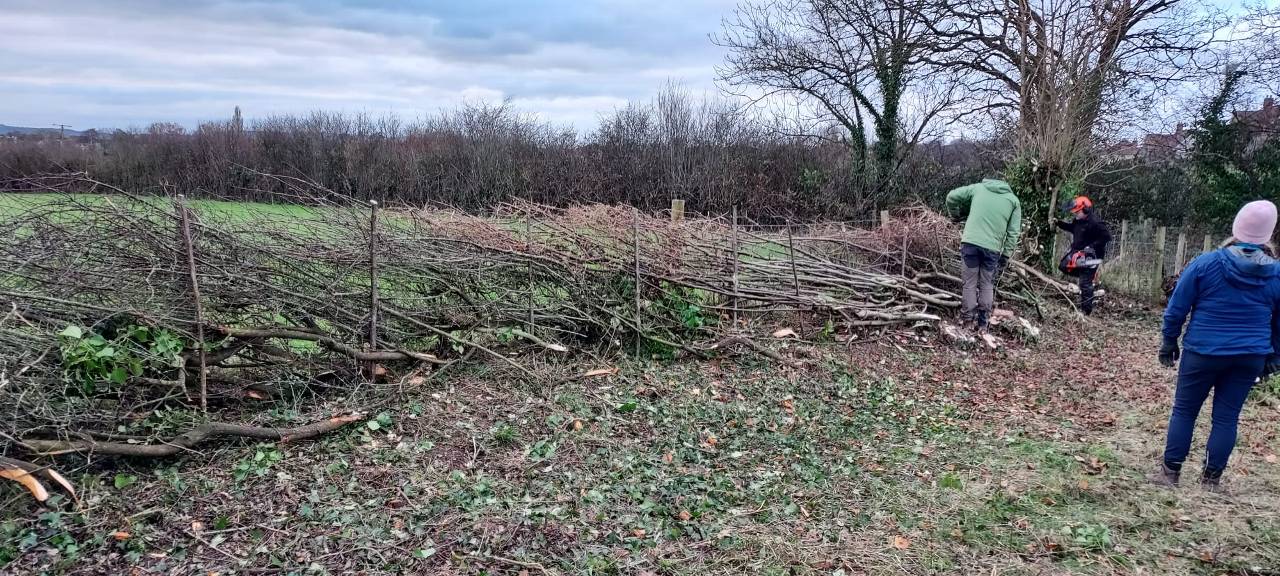
I have since taken part in everything from surveying bats and dormice, tree and hedge planting, moth trapping and butterfly identification, to bird song walks, bat acoustic monitoring and bat box checks.
I have thoroughly enjoyed the start to my university experience. I feel I will be prepared for the future and with this I am excited to go into the next year and have more fun and learn more about the environment and how I can work to protect it.
Harper Adams has a strong community and social life - there is always something for everyone. I found I met friends early in the year through my course and shared halls the most but also bonded in societies and clubs.
I’ve made so many friends and connections along the way who have helped train me, and made me passionate about bat monitoring, surveying and conserving our bats.

 Day in the life of an Automotive Engineering student
At Harper Adams University, our engineering students tackle issues head-on, developing solutions that make a real difference. Our students l …
Posted 17 July
Day in the life of an Automotive Engineering student
At Harper Adams University, our engineering students tackle issues head-on, developing solutions that make a real difference. Our students l …
Posted 17 July