
Loading search...
Loading search...
Loading site search...
Loading site search...
Loading site search...
Loading...
Loading site search...
Loading site search...
Posted 29 January
"While the industry grapples with ongoing recruitment and retention challenges, we were encouraged to learn nearly half of young people we asked were telling us something important: they’re not turning their backs on farming - they simply want clearer pathways in to farming. If we improve awareness and access, agriculture has a real opportunity to inspire the next generation to work in an already thriving industry.
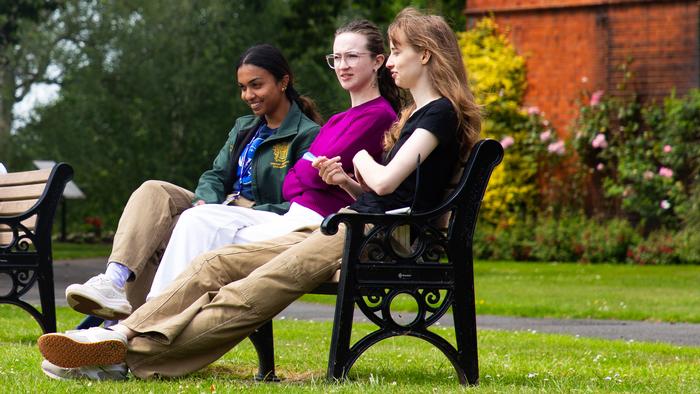
An important new report is calling for urgent action from the agricultural and horticultural industry, government and the education sector to address the ongoing threat of skills and labour shortages in the food and farming industry.
The report makes clear that in the face of growing threats to British food security, securing a skilled workforce will be crucial to a productive and resilient food system.
Commissioned by dairy cooperative Arla Foods in collaboration with the School of Sustainable Food and Farming at Harper Adams University, the report highlights that amongst the biggest barriers to entry to a career in farming are the perceptions and knowledge of young people, their parents, and careers advisors at all levels.
The report shows that only four per cent of young people are currently employed in food and farming, but that around two-fifths – 38 per cent - would be open to a career in the sector. Bringing them in is crucial, but they are being held back because they do not know enough about it, see other careers as more appealing, or are unaware of the best routes into the sector.
Agriculture and horticulture face an awareness problem, an attractiveness challenge and an access barrier. Young people associate farming with a sense of purpose and connection to nature, but also with hard labour, long hours and low pay.
The importance of reliable access to food in a world of geopolitical pressures, environmental changes, and societal transformation cannot be overstated. With people at the heart of a resilient and sustainable food system, the report calls for a unified effort across industry, schools, colleges and universities, and government with three clear recommendations:
Bas Padberg, Managing Director at Arla Foods, said: “The agriculture sector plays a crucial role in providing naturally produced food that is accessible, and farmers work hard to produce it in a way that cares for the world around us. At the heart of all of this is people.
“We have the opportunity to ensure our food supply chain continues to be resilient, providing essential nutrition for our society. If we don't succeed in bringing in more people and addressing current shortages there are obvious threats to the UK's food security, as well as to the affordability and accessibility of food.”
Among the Harper Adams University academics who contributed to the report were Dr Fiona Williams and Dr Laura Palczynski.
Dr Williams said: ““The value of this research is that it moves us beyond assumptions and gives us clear insight into where the opportunities lie. The findings point to practical ways the sector can work together to improve access, understanding and progression into agricultural careers.”
And Dr Palczynski added: “One of the most striking findings from this research is that 42 per cent of young people either want to know more about careers in agriculture or simply don’t know how to access them. That represents a significant opportunity - not a lack of interest, but a lack of clear pathways. It reinforces the importance of building better connections between education, employers and the sector as a whole.”
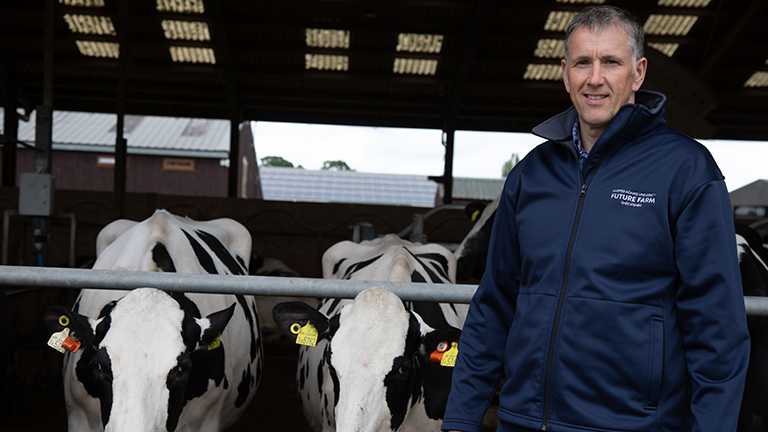
Alex Hardie, Business Development Manager, School of Sustainable Food & Farming, said: "While the industry grapples with ongoing recruitment and retention challenges, we were encouraged to learn nearly half of young people we asked were telling us something important: they’re not turning their backs on farming - they simply want clearer pathways in to farming. If we improve awareness and access, agriculture has a real opportunity to inspire the next generation to work in an already thriving industry.
“My colleagues’ research makes clear there is a significant pool of young people who are open to a future in agriculture but don’t yet know how to access it. That represents a real opportunity. This report gives us a strong foundation to collaborate across industry, education and government to turn interest into action.”
The report, published and released at a Parliamentary event for key political stakeholders yesterday, also draws on a survey of Arla’s 1,900 UK farmer owners in Summer 2025 which revealed that finding people with the right skills and experience to work on farms continues to be a chronic issue. Around five in every six farmers who have tried to fill a vacancy say that they have had very few qualified applicants – or no applicants at all. This has been difficult for some time, but it has got progressively worse over the years since Arla’s research started - around 84 per cent now compared to 79 per cent in 2021.
Arla farmer David Christensen added: “This report shines a light on one of the most important difficulties facing UK agriculture: how hard it is to secure the people who will shape its future. The findings make clear that attracting young talent is not a challenge that farmers can solve on their own. It demands urgent collective action; if we want a resilient, competitive and sustainable agri-food sector – if we want abundant, affordable and tasty food to be delivered reliably to our supermarket shelves - we must invest now in the people who will produce it.”
Arla’s farmer owners are themselves committed to supporting the next generation. In 2025, Arla farmers reported delivering more than 120 visits to schools. To help farmers provide even more engaging, inspiring and educational visits, Arla will provide a new range of materials for school visits, which will showcase what roles and jobs are part of daily farm life, as well as helping children understand where food comes from.
By acting together, the sector can build a workforce equipped to deliver the UK’s ambitions for food security, climate recovery and a thriving rural economy. The insights from young people offer both a warning and an opportunity: with the right support, agriculture can become a dynamic, inclusive and future-ready career destination.
The full report can be viewed here.

We use cookies to ensure that we give you the best experience on our website. If you continue without changing your settings, we'll assume that you are happy to receive all cookies on the website. However, you can change your cookie settings at any time.