
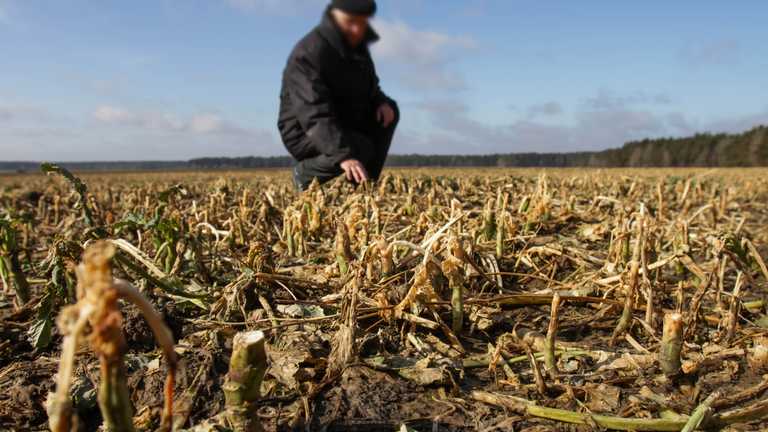
President hails 'great honour' of bringing leading agricultural engineering conference to University
Posted Today
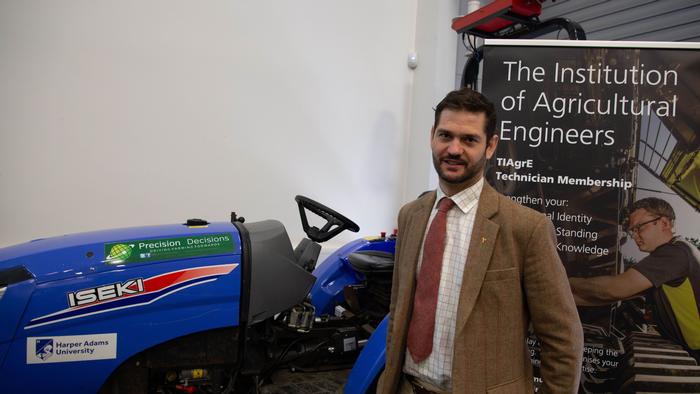
The new President of the Institution of Agricultural Engineers has said bringing a key conference to Harper Adams University was a ‘great honour.’
Current IAgrE President Kit Franklin is a Senior Engagement Fellow at the University – as well as an alumnus of its MEng Agricultural Engineering degree.
He said: “Bringing the Landwards Conference – which was focussing on Agricultural Automation - to Harper Adams University was a great honour and felt very fitting.
“It is 15 years since the arrival st the University of the late Professor Simon Blackmore, whose vision was automation - and 10 years after we launched the Hands Free Hectare from the same building which hosted the conference.
“The fact that this year’s conference also fell within the University’s 125th anniversary celebrations only furthered the significance of the day.”
With agricultural automation reshaping how food is produced, managed and delivered this year’s event brought together engineers developing next-generation technologies, businesses turning ideas into practical solutions, and farmers driving adoption on the ground.
Kit added: “We examined the tangible ways in which Automation is already helping farming businesses - be it alleviating staffing bottlenecks, driving chemical reduction or aiding soil improvement.
“As an engineer it's also great to see the next cutting-edge developments - which were well demonstrated by Harper Adams researcher Nestor Deniz, who presented on his exciting work in humanoid robotics.”
Mr Deniz, a Principal Doctoral Research Assistant, discussed his research examining how humanoids could help farmers with apple harvesting – and where the technology could go next.
He said: “Orchards, packhouses and farm buildings are already designed around the human body, so a humanoid can work in the farm we already have, without changing tree shapes or layouts.
“The idea is one robot with many skills, used all year round rather than for a few weeks at harvest.
“We showed the robot picking apples autonomously in the lab, and training new skills in simulation before moving to the field.
“We were also honest that there is still important work to do before it is ready for a real orchard.
"It was an honour to be asked to present, and great fun – although I’ll admit I was a bit nervous, presenting in my second language.
“The robot opening the talk certainly helped!
“What I valued most was the conversation with growers and engineers afterwards. They know orchards far better than I do, and their points of view help us decide what to work on next."
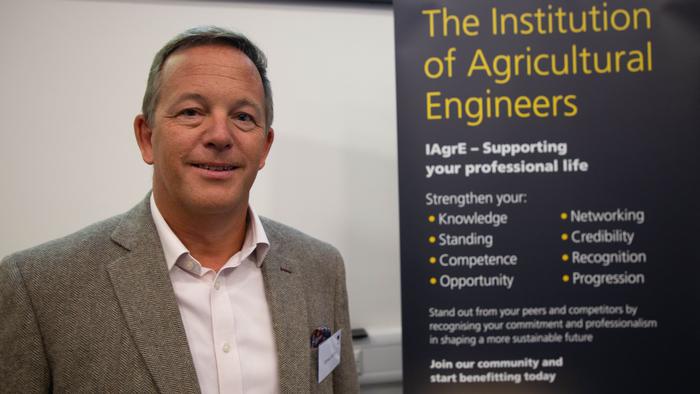
James Miller, the CEO of the advanced robotics and AI company Earth Rover, shared an update on its Concentrated Light Autonomous Weeding and Scouting (CLAWS) Robot at the conference.
He said: “I presented on the development and commercialisation of CLAWS as a chemical-free, autonomous field robot and focussed on the message that agricultural innovation succeeds only when technology, economics and customer needs align.
“Moving from innovation to farm impact requires capable technology, resilience to real-world variability and continuous customer involvement- this is something we believe we have achieved at Earth Rover and so we are scaling the deployment of robots through 2026 and beyond.”
Most popular
-
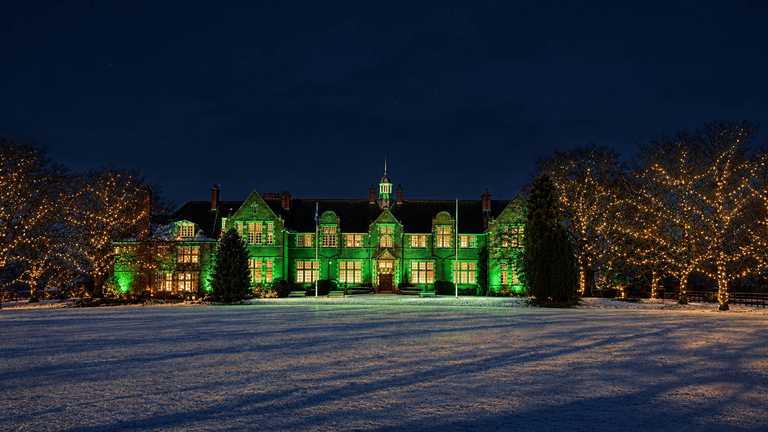 Harper Adams University lights up for 125th anniversary Festive Celebration
28 October -
 Family behind England’s first-community owned farm unveiled as latest Honorary Graduates
27 October -
 Fresh opportunities to study in Australia and New Zealand unveiled
19 October - Growers unite behind water security recommendations ahead of Westminster launch
30 October -
 Graduate wins both British Farming Awards and Farmers Weekly Ag Student of the Year prizes
16 October -
 Honorary Degree celebrates Archers star's 40 years illuminating rural life
14 October