Climate summit criticised as 'missed opportunity'
Posted Today
This year’s COP summit was a missed opportunity for the world’s climate and Agri-food systems - which are particularly vulnerable to climate shocks - a leading expert has said.
Each year, the United Nations Climate Change Conference, or Conference of the Parties (COP) brings Governments together from around the world and aims to encourage the development of policies to limit global temperature rises and help people adapt to climate change’s impacts.
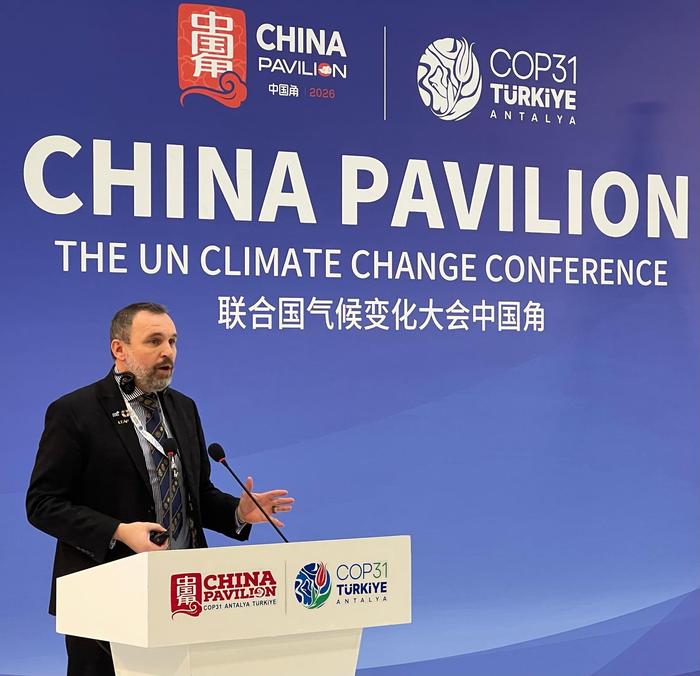
This year’s conference was held in Antalya, Turkiye, and among those attending was Professor Michael Lee, Deputy Vice-Chancellor of Harper Adams University. The University is an official observer organisation to the United Nations Framework Convention on Climate Change (UNFCCC.)
Professor Lee, a sustainable livestock expert, attended both as an observer and to help shape discussions around climate change, food and farming.
This year’s conference opened with the sobering news that – thanks to governmental inactivity – the world is likely to overshoot the original target of limiting global warming to a 1.5 degree Celsius increase.
Experts warn that this overshoot will have significant impacts on the world’s climate, people and food systems – so Professor Lee said it was ‘disappointing’ there had been a lack of progress in negotiations during the conference.
He said: “Sadly, much of this year’s summit failed to move beyond a stalemate, with action put off for another year – despite the clear warning signs that we are set to overshoot the original targets in the Paris agreement.
“This is incredibly disappointing and a failure of leadership from the world’s Governments – and it will have implications for people around the globe.”
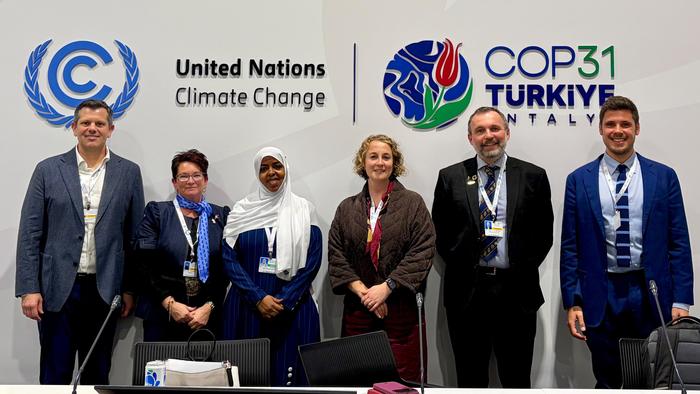
However, despite his disappointment at the overall picture, Professor Lee also used his time in Turkiye to help shape opinions and to influence policy.
He spoke at a series of meetings, including at the China Pavillion, to present the latest work on the United Nation’s Food and Agriculture Organisation greenhouse gas guidelines, at the COP Youth Pavilion to discuss the Future of Farming, and at an event the University organised alongside the British Meat Processors’ Organisation, the Global Roundtable for Sustainable Beef, and Beef + Lamb New Zealand on greenhouse gas split gas reporting.
He added: “For an observer, as I am, COP is not just about the final Global Outcome text, but the opportunity to raise awareness, discuss science, change mind sets and hopefully influence negotiators and ministers for the long-term game.
“Livestock are a linchpin to our global agri-food systems and will remain at the heart of sustainable and resilient systems in the future.
“Therefore, we should support livestock farmers to ‘improve and not remove’ - helping them transition to new practices and find new ways to measure and record the progress they are making.
“The meetings I spoke at during this year’s COP helped set out why this is important – and why we must continue to advocate for a farming system which has both planetary and human health at its heart.”
Most read
-
 Academic scoops prestigious environmental award
18 November -
 Threats to UK fruit and vegetable production underlined in major new report
17 November -
 Council celebrates University's 125th anniversary - and growing role in Telford & Wrekin
16 November -
 Pan-European climate change research project launched
19 November -
 Harper Adams University lights up for 125th anniversary Festive Celebration
28 October -
 Applications open for prestigious MIBTP PhD scholarships at Harper Adams University
9 November