Digital technology and data hold the keys to the future of farming – and offer huge opportunities for the next generation of farmers.
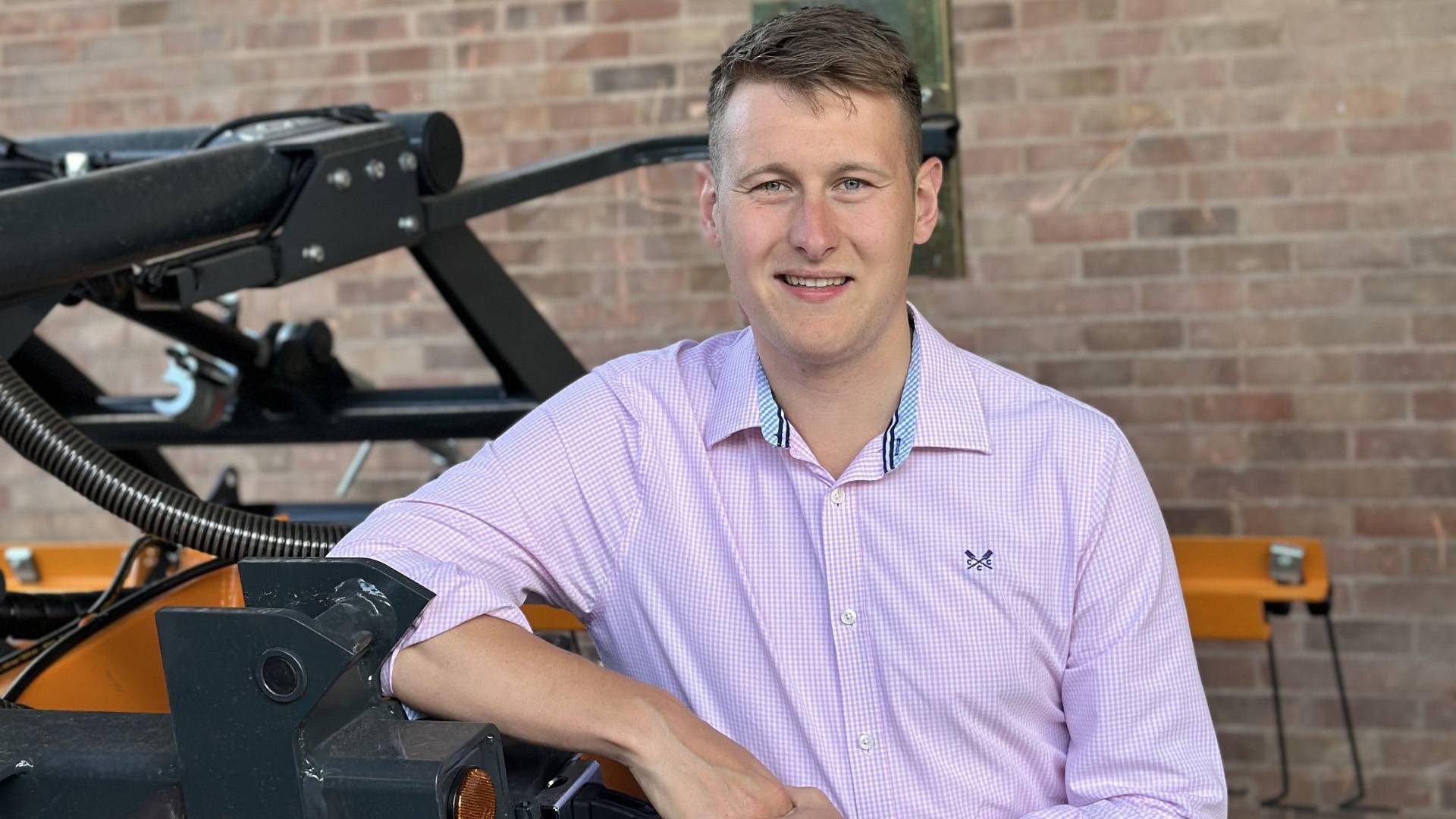
That’s the view of JCB engineer and award-winning graduate George Ellliott, who was profiled for the NFU’s Student Farmer magazine.
Agriculture with Mechanisation alumnus George chose to go straight into an industry role after his A-levels – and while he gained valuable experience, he also knew there was something missing.
He said: “I remember thinking, ‘I don’t want to be a tractor driver’. My jobs up until that point had opened my eyes to the world of precision farming and large-scale arable growing. It got me excited to find out more.
“So, I left and went to start my first year at Harper, to my mum and dad’s relief! They always wanted me to go.”

That love of precision farming was certainly stoked during his Harper Adams studies – and on his industry placement year.
George secured the JCB Business Scholarship and spent 12 months at the company – returning there immediately after graduation to his current role, demonstrating the latest innovations in agricultural equipment.
Looking back at the many industry speakers he got to meet during his studies, George added: “I couldn’t believe more people weren’t talking about what I’d heard.
“I thought that there was so much opportunity. This was exactly what I wanted to do. Whether it’s a tractor or a cattle management system, I knew I wanted to work in this area.”
These changes, George believes, are likely to be seismic for the industry.
Data in a changing industry
He added: “If we want to continue to be sustainable, in terms of being a country that produces food well and competes on the global market, then we need to invest in skills and technology.”
“Farmers will need skills in things like data analysis and setting up precision farming equipment. In my opinion, farming is going to change more in the next 10 years than it has done since World War II.
“We have never, in recent memory, farmed in a world without subsidies, and we are now starting to enter that world. So, really, how are we going to do this? Wheat prices are high, and the cost of production has increased. We’re going to have to become better at what we do, and this is where, I think, data will help us.”
Indeed, it is the opportunities data offers which George thinks will prove to be farming’s salvation.
He added: “There’s a lot of doom and gloom in farming at the moment, and that’s because it’s not seen as a particularly prosperous environment; but in spite of this, I am so enthusiastic about the future of farming.
“There is a huge opportunity for the next generation of farmers. The jobs that are going to be available in the next 50 years don’t even exist now, and that’s thanks to precision farming, artificial intelligence and robotics. It’s an extremely exciting place to work.”
Read the whole piece here.

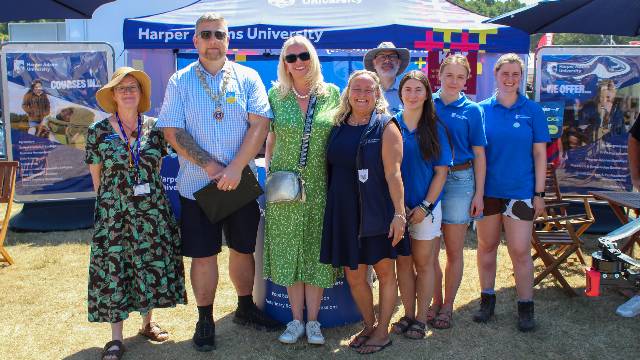 University's 'standout' display named prizewinner at Newport Show
An innovative and eye-catching display has secured Harper Adams University a trade stand award at the institution’s local show.The sta …
Posted 13 July
University's 'standout' display named prizewinner at Newport Show
An innovative and eye-catching display has secured Harper Adams University a trade stand award at the institution’s local show.The sta …
Posted 13 July