
Agriculture's power to help hope grow underlined by University expert
Posted 14 July
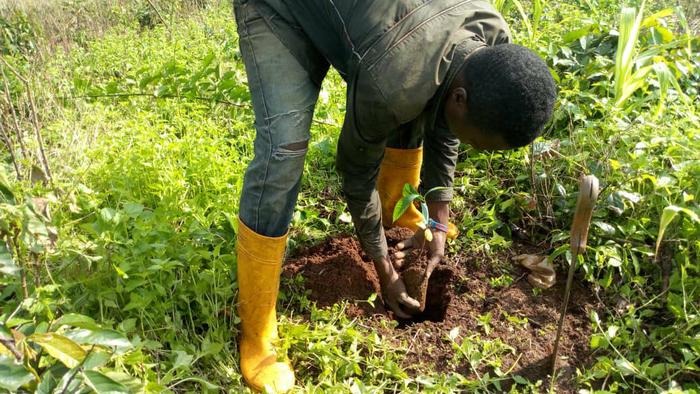
Agriculture’s power to build stronger communities and tackle unsafe migration has been underlined by a Harper Adams University expert at an event in Nigeria.
Dr Richard Byrne was speaking as a guest at the launch of the Pathways to Freedom African Network, where he discussed his work on stabilisation agriculture – and how the work of charities, civil society organisations and others can offer hope to the communities they serve.
He said: “I have been working on stabilisation agriculture for nearly 20 years now – which is the idea you can build community strength through food security, environmental security and economic security.
“I initially got involved with the kind of projects I discussed at the conference after the UK’s first Anti-Slavery Commissioner, Kevin Hyland, invited me to review a livelihood project around a decade ago after seeing some of my work on stabilisation agriculture.”
From that initial introduction, Dr Byrne began to work with Grow Edo, a UK-registered charity which works to combat human trafficking and reduce vulnerability among at-risk communities in Nigeria.
He added: “Poor people are enticed by traffickers to leave rural areas for ‘jobs and opportunities’ – this is irregular migration, as they are essentially just leaving, with no visa or actual job.
“Once en-route, they are taken by traffickers to work in mines, brothels, construction and so on. Some are trafficked overseas, and a lot to various north and west African nations.
“While the south of Nigeria does not experience the same level of insurgency as the north, the region faces significant instability, including kidnappings, inter-communal tensions, widespread criminality, and increasing access to firearms - all of which contribute to restricted movement and limited investment.”
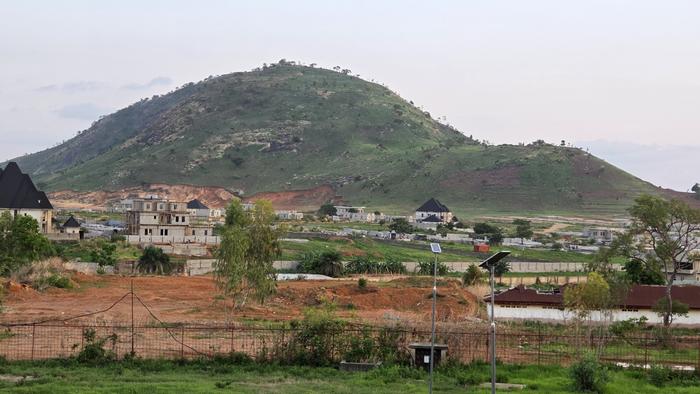
Despite this, Dr Byrne stressed the key role agriculture can work in helping to bring stability to communities – and offer people hope.
He added: “Edo State is one of the regions in Nigeria most affected by human trafficking. Operating through a network of training farms in the state, the Grow Edo project addresses interlinked challenges which affect the region – such as youth unemployment, insecurity, and economic vulnerability.
“It focuses on engaging young people in agricultural training across a range of areas, including cereals, livestock, horticulture, poultry, fruit, and fish farming.”
The strength of the project, Dr Byrne added, was not only the transformational effect it had upon the dignity of the hundreds of young people who took part – but also how its wider benefits boosted entire communities.
He added: “To date, around 1,500 young people have passed through the programme, with ongoing support provided through employment opportunities, land leasing, cooperative structures, and mentoring.
“This approach not only generates income but also strengthens social cohesion and builds local economic networks which underpins stability. The project has also contributed to food security, maintaining supply to local markets - even during the COVID-19 lockdown.
“With a strong emphasis on quality and food safety—supported through a national registration programme – the project enables participants to differentiate their products and build market demand.”
The conference which Dr Byrne was speaking at concluded with the formal launch of the Pathways to Freedom African Network as a continent-wide organisation, focused on supporting youth livelihoods and addressing the root causes of vulnerability.
It will aim to reduce poverty by strengthening sustainable livelihoods, thereby helping to curb irregular migration and the risks of human trafficking and exploitation - as well as disrupting trafficking networks and supporting victims as practical steps which build on the work of organisations such as Grow Edo.
Most popular
-
 125th anniversary celebrations launched by Chancellor Her Royal Highness The Princess Royal
29 September -
 Graduate planning to transform Shetland farming named Farmers Weekly Ag Student of the Year
2 October -
 Award-winning graduate takes on Duchy of Cornwall’s first regenerative Farm Business Tenancy
6 October -
 Allied professionals can support farmer mental health - but should not be relied upon and need help themselves, study says
5 October -
 Graduation 2026: meet our alumni speakers
18 September -
 Conference and party round off 125th anniversary opening celebrations
30 September
Related articles

Dairy Manager highly commended as Young Dairy Farmer of the Year at Cream Awards 2026
Posted YesterdayAward-winning graduate takes on Duchy of Cornwall’s first regenerative Farm Business Tenancy
Posted 6 October