
University developing drought-resilient crops to meet climate change challenges
Posted 7 August
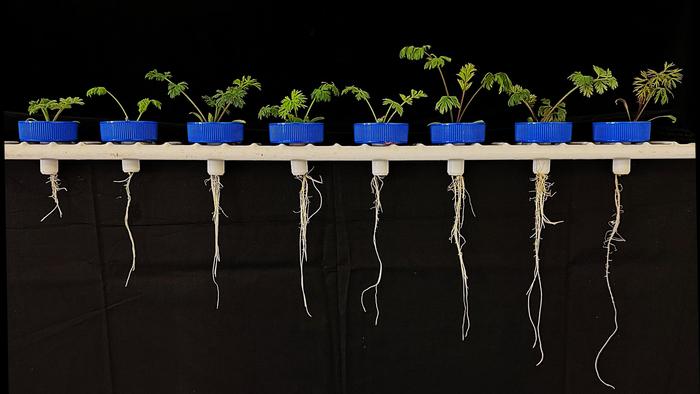
Rooting traits that could improve stress resilience are being explored in carrots
Work is underway at Harper Adams University to develop crops which can withstand the stress of droughts of the kind currently afflicting the UK - in a bid to boost food security.
Professor of Crop Science Jim Monaghan, Director of the University’s Centre for Crop and Environmental Science, said: "We are growing crops in the most challenging conditions for generations.
“Drought has been declared across the entirety of Wales and more than half of England. For some areas of Southern England, July of 2026 has been pronounced the driest month ever recorded by the Met Office. In addition to these exceedingly dry conditions, heatwaves have also been a regular occurrence throughout spring and summer.
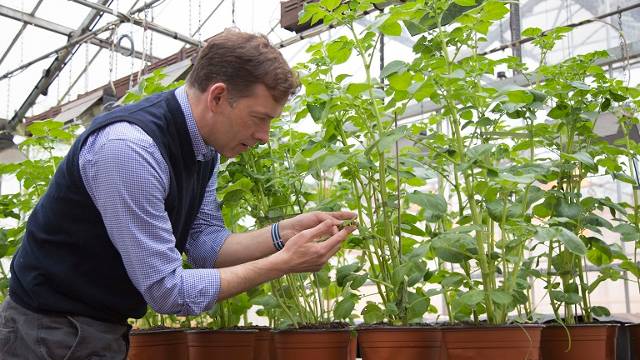
“Both lack of rainfall and abnormally high temperatures are detrimental to crop production, because these stressful growing conditions reduce yields and quality.
“Arable crops have been hit hard this season - but even irrigated crops like potatoes and vegetables are being stressed by high temperatures and the challenges of getting enough water to the field at the right time.”
As the impacts of climate change continue to accelerate, droughts and heatwaves will become more frequent and intense in the future. Therefore, to safeguard UK food security against these extreme weather events, experts believe new crop varieties with improved stress resilience need to be created.
To help facilitate the development of vegetable varieties with improved stress resilience, the Vegetable Genetic Improvement Network (VeGIN) was established as a DEFRA-funded collaborative research effort between Harper Adams University and Warwick University Crop Centre.
Dr Andrew Beacham, Senior Lecturer and VeGIN lead at Harper Adams, added: “VeGIN research at Harper Adams consists of the design of tests to analyse the resilience of vegetable plants against various abiotic stresses, including simulated droughts and heatwaves.
“These are then used to screen collections of genetically and physiologically diverse varieties, including wild ancestors and landraces – which are, essentially, a variety of a crop which has adapted to a specific local area.
“The tests identify valuable traits and their underlying genes, which can then be bred into commercially viable varieties.”
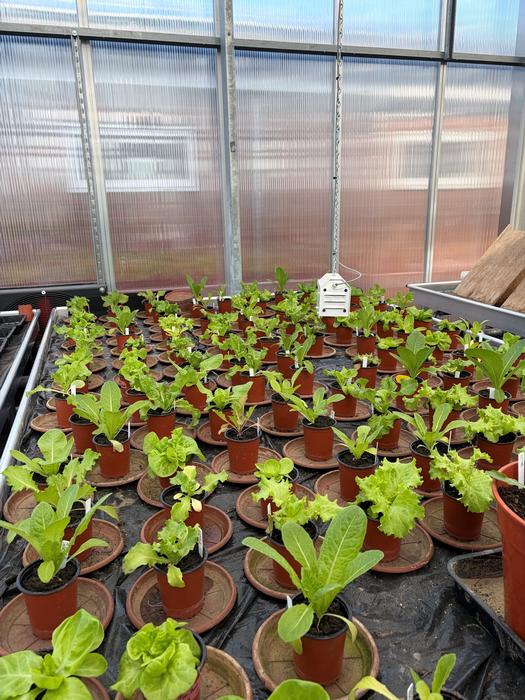
Dr Ashley Garrison, VeGIN Researcher, said: “Over the last year, we have identified the lettuce varieties which are most resilient to heat and drought stress, brassica lines that grow deeper root systems to potentially increase water uptake, and coriander varieties that are resilient to heat-induced flowering.
“Current work is focussing on finding advantageous rooting traits in carrots and onions that could confer improved stress resilience. “Pre-breeding research, such as VeGIN, generates the foundational knowledge of crop traits and their underlying genetics that makes the development of improved varieties possible.
“Such research can, therefore, play a key role in developing stress resilient sustainable crop varieties and helping arable farming to adapt during climate change.”
Most popular
-
 Fresh opportunities to study in Australia and New Zealand unveiled
19 October -
 Graduate wins both British Farming Awards and Farmers Weekly Ag Student of the Year prizes
16 October -
 Honorary Degree celebrates Archers star's 40 years illuminating rural life
14 October -
 Scale of rural crime underestimated, expert tells MPs
15 October -
 Smart data disease prediction project earns engineer prestigious award
12 October -
 Graduate planning to transform Shetland farming named Farmers Weekly Ag Student of the Year
2 October