

University extends major research partnership with leading firm ABP
Posted Today
“The extended PRISM programme gives us a valuable opportunity to follow performance over time and bring together environmental, economic and behavioural evidence for reducing emissions. That long-term perspective is essential if our research is to produce credible insights that can be translated into practical actions for beef and lamb producers across the UK and beyond, as well as for the wider food chain.”
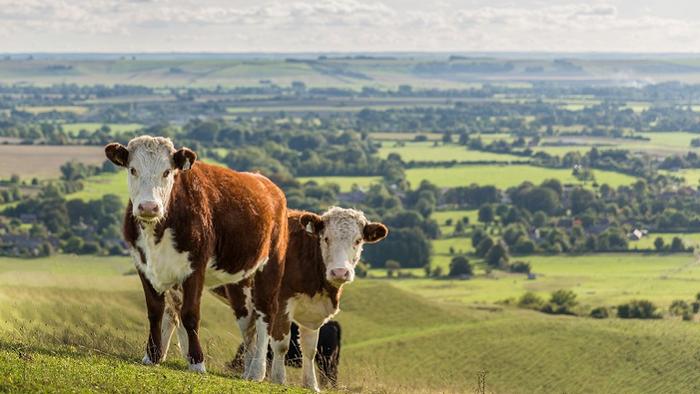
A research partnership between Harper Adams University and leading meat and agri-food firm ABP has been extended – and will see the collaboration run for a full decade.
The £1.5 million PRISM 2030 programme began in 2022 – and the new partnership will now run through to 2032, taking the relationship to a decade and marking the next phase of research into the sustainability and performance of UK beef and sheep production.
Launched by ABP in 2022, PRISM 2030 works with more than 300 beef and sheep suppliers to build a stronger evidence base around farm greenhouse gas emissions and identify practical opportunities for improvement.
Across the first three years of the programme, farm data was independently analysed by Harper Adams University researchers, with participating farmers receiving tailored recommendations developed with The Andersons Centre to support improvements within their own businesses.
Four years on, PRISM has completed two full carbon assessment cycles and generated 1.4 million data points, establishing one of the most robust primary datasets on UK livestock performance and emissions; providing a clearer picture of the factors associated with differences in carbon performance across farming systems.
The PRISM Year Three Report – which has just been published - shows average beef emissions reduced by 8.3 per cent between the programme’s two assessment phases, with average lamb emissions reduced by 1.3 per cent.
Farms reporting management changes since their first assessment also recorded lower carbon footprints than those reporting no change – and while the report cannot attribute these differences to individual interventions, the findings provide a stronger basis for understanding how management, productivity and efficiency relate to emissions.
Under the extended partnership, three further rounds of carbon footprinting are planned in 2027, 2029 and 2031, allowing researchers to track farm performance over a longer period.

With the Perry Foundation, ABP have also co-funded a PhD at Harper Adams using social science and PRISM data to explore farmer behaviour, decision-making and the factors that influence change on farm, while Professor Jude Capper, Chair of Sustainable Ruminant Production at Harper Adams University, will undertake in-depth work with a cohort of PRISM farms, combining detailed case studies with one-to-one consultancy to explore opportunities for further carbon reduction.
Professor Capper said: “The extended PRISM programme gives us a valuable opportunity to follow performance over time and bring together environmental, economic and behavioural evidence for reducing emissions. That long-term perspective is essential if our research is to produce credible insights that can be translated into practical actions for beef and lamb producers across the UK and beyond, as well as for the wider food chain.”
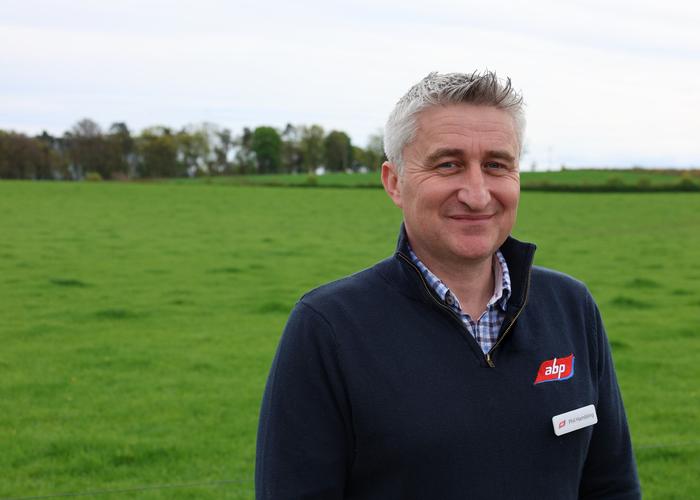
Phil Hambling, Director of Agriculture and Sustainable Sourcing at ABP, added: “What is encouraging from the Year Three data is that we are starting to build a much clearer picture of what sits behind differences in carbon performance between farms.
“There is no single change that will deliver the same result for every business, but the findings are showing how closely emissions can be linked with productivity, efficiency and the way an individual system is managed. That gives us a much stronger basis for helping farmers understand where the opportunities may lie within their own business.
“PRISM was always intended to be a long-term investment in building evidence, so extending our work with Harper Adams University allows us to take the next step. We now want to understand which changes deliver results, how they stack up commercially and what motivates farmers to adopt them, so that the learning can ultimately benefit a much wider group of beef and sheep producers.”
One of the clearest findings from the Year Three Report is the link between biological efficiency and emissions.
Future analysis will also broaden to include farm economics, whole-farm nutrient circularity and nutritional life cycle assessment, alongside continued knowledge exchange with farmers and the wider agricultural sector.
The longer-term ambition is to use the findings from PRISM to support the expansion of carbon footprinting across ABP’s wider beef and lamb supply base, giving more farmers access to farm-level data and helping identify where practical improvements can be made.
To read the PRISM Year Three report in full, click here
Most popular
-
 Harper Adams University lights up for 125th anniversary Festive Celebration
28 October -
 Growers unite behind water security recommendations ahead of Westminster launch
30 October - PhD student's pride at helping continue University's poultry research tradition
Yesterday -
 Family behind England’s first-community owned farm unveiled as latest Honorary Graduates
27 October -
 Fresh opportunities to study in Australia and New Zealand unveiled
19 October -
 President hails 'great honour' of bringing leading agricultural engineering conference to University
2 November
Related articles
President hails 'great honour' of bringing leading agricultural engineering conference to University
Posted 2 NovemberGrowers unite behind water security recommendations ahead of Westminster launch
Posted 30 October