

Education and skills key to safeguarding Britain’s future food supply, say British dairy farmers
Posted 12 August
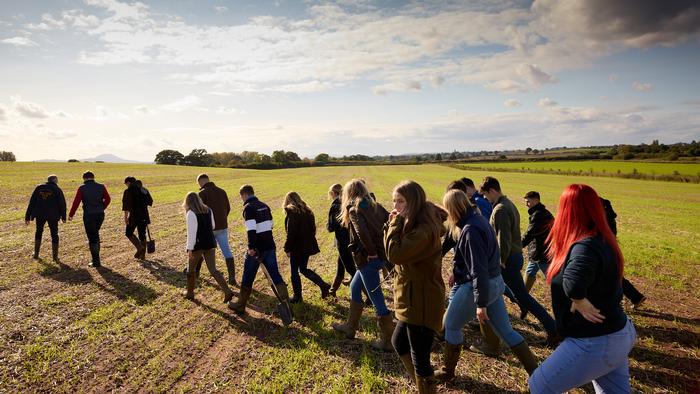
British farmers are warning that investing in education, skills and career pathways is now critical to protecting the nation's future food supply.
As workforce pressures continue across the UK food sector, and as the Government looks at ways to bring more young people into work, a key challenge is to change perceptions of food & farming and build excitement about careers in the sector, showcasing the modern and progressive opportunities available.
A new survey of British farmers, carried out by the UK’s biggest dairy cooperative, Arla, highlights that almost 65 per cent of farmers say better education and training is the most effective measure to attract more people into the industry.
82 per cent of farmers who have had a vacancy report that very few or no applicants for the role have the right skills, a figure that has not dropped below 80 per cent in the last seven years. Beyond the farm across the wider supply chain, Arla’s own data shows it takes around 105 days to recruit engineers into the supply chain compared to an average of 58 days for other roles, the need to address the challenge is clear.
Inspiring the next generation and attracting a younger demographic into the food sector, is also pressing with an aging workforce across agriculture and food production. 48 per cent of farmers are over the age of 55 and the average age of workers in the supply chain is 46, up from 40 in 2018.
The findings highlight a shift from a labour shortage to a wider skills challenge that could have implications for the long-term resilience of British food production if left unaddressed. Farmers report that ongoing recruitment difficulties are increasing costs, making it harder to plan for the future and placing additional pressure on everyday farm operations.
The research forms part of Arla’s seventh annual survey of farmers on the issue and builds on recommendations from its recent White Paper, developed in partnership with Harper Adams University. The data shows a skills gap that remains significant. The solution lies in attracting, training and inspiring the next generation to pursue careers across food and farming in order to ensure the industry has people with the right skills.
Food and farming careers today span science, technology, engineering, sustainability, logistics, nutrition and business- yet many young people remain unaware of the opportunities available or how to access them. The research with Harper Adams University found that interest exists among young people, but awareness, visibility and clear entry routes are often lacking.
Bas Padberg, Managing Director of Arla Foods UK, said: “Securing the future of British food starts with securing people. Behind every litre of milk and every meal on the table is a skilled workforce producing, processing and transporting food.
“We need to inspire young people earlier and connect them to food. When people understand more about where it comes from what is takes to feed a nation, helping to be a part of that becomes a much more attractive proposition. If we want a resilient food system capable of feeding future generations, we must invest in the skills, education and pathways that will build the workforce of tomorrow.”
Alex Hardie, Development Manager at the School of Sustainable Food and Farming at Harper Adams University, added: "Each year at Harper Adams University, hundreds of our students progress on to careers in food and farming- and our consistently high figures for graduate employment show that the demand is there for these skills.
"Our food and farming sectors offer modern, hi-tech jobs which meet key Government priorities - ensuring a robust and sustainable food supply chain should be a core priority for Ministers.
"Firms like Arla and institutions such as Harper Adams University have a role to play - but we need earlier investment in education, skills and training to help young people realise the vast range of opportunities available to them."
Alongside wider industry initiatives, Arla is expanding its own efforts to engage young people, raise awareness of modern food and farming careers, and support greater understanding of the skills needed for the future food system. Launching a new outreach programme to young people across the country, the initiative will help address some of the key barriers across food and farming to the workforce and skills crisis. Reaching over 100 schools and more than 100,000 young people, the education initiative wills showcase the breadth of progressive and modern roles available in food production.
Paul Dover, UK Agriculture Director at Arla Foods UK, said: “The food supply chain has been facing increasing pressure from workforce challenges for a number of years, and the latest data from farmers shows the picture is not improving. This is a challenge that will impact beyond the farm, if action isn’t taken.
“Government proposals like the Farming Roadmap and its efforts to help young people into work through courses in schools are helpful and will go some way to supporting farmers, but the reality is we need intervention much earlier. We need to change perceptions of the sector and ensure attractiveness to expand our talent pool to bring many more young people into our industry.”
And Tim Dale, who farms for Arla. added: "As farmers, we're passionate about producing nutritious food, but none of that happens without people. Finding skilled workers is becoming increasingly difficult, and it's one of the biggest challenges facing farms today.
"Modern farming is innovative, progressive and involves multiple skills such as business, science and technology. We need to do more to showcase the exciting opportunities available and create clearer pathways into the sector.
"Investing in the next generation isn't just important for our farms, it's essential for the future of British food production."
Most popular
- Fresh opportunities to study in Australia and New Zealand unveiled
19 October -
 Graduate wins both British Farming Awards and Farmers Weekly Ag Student of the Year prizes
16 October -
 Honorary Degree celebrates Archers star's 40 years illuminating rural life
14 October -
 Scale of rural crime underestimated, expert tells MPs
15 October -
 Smart data disease prediction project earns engineer prestigious award
12 October -
 Graduate planning to transform Shetland farming named Farmers Weekly Ag Student of the Year
2 October