
Harper Adams University secures £5 million Leverhulme grant to launch Transformative Farming doctoral programme
Posted 1 September
“The interdisciplinary nature of the programme draws upon the expertise we have right across our research centres here at Harper Adams. It makes the most of our depth across the Harper Institute of Technology, the Centre for Crop and Environmental Science, and Centre for Social Science, drawing in other colleagues from cross-cutting Centres on evidence-based agriculture and data science."
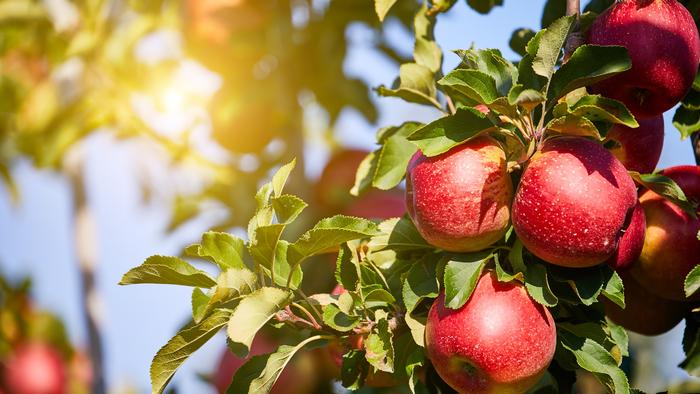
Harper Adams University has been awarded a £5 million grant from the Leverhulme Trust to establish the Leverhulme Transformative Farming Doctoral Programme.
It is one of just 10 UK institutions chosen to receive a Leverhulme Centenary Doctoral Scholarship grant.
The grant will enable Harper Adams to set up an interdisciplinary doctoral programme focused on closing a critical skills and research gap in the UK agri-food system.
Over nine years, the programme will train 30 PhD researchers, equipping them with cutting-edge skills in data-driven and intelligent horticultural systems, informed by an understanding of responsible innovation and stakeholder engagement.
The Centre will draw on world-leading research at Harper Adams in engineering, crop science, environmental science and evidence synthesis, data science, and social science.

Professor Fernando Auat Cheein , Centre Lead for the Harper Institute of Technology, is the Principal Investigator and Programme Director.
He said: "Horticulture generates billions of pounds for the UK economy each year – yet it is facing a series of crises which threaten that success.
"Climate instability, soil degradation, rising input costs and falling numbers of labourers each threaten the viability of UK horticulture – and while there are technologies capable of transforming this picture, the sector currently lacks the skills to implement them.
"Our new programme will tackle this, training 24 doctoral researchers to develop cutting-edge skills – such as artificial intelligence and machine learning, autonomous robotics, remote sensing, automation and digital twin technology – and embed them directly within real production systems."
A programme built on engineering and crop science depth
The Harper Institute of Technology will lead two of the programme's core research themes: Autonomous Systems and Precision Engineering – covering agricultural robotics, selective harvesting, phenotyping platforms, post-harvest grading and soil sensing – and Digital Twin and Data Infrastructure - building whole-system digital twins, sensor networks, AI explainability and data governance frameworks for horticultural production. This work draws on HIT's Agricultural Engineering Innovation Centre and the Hands-Free Hectare and Hands-Free Farm, which demonstrate fully autonomous crop production, giving doctoral researchers access to some of the most advanced agri-robotics infrastructure in the UK.
Professor Jim Monaghan, Director of the Centre for Crop and Environmental Science (CCES) will co-lead the theme on Intelligent Crop Management and Climate-Resilient and Net-Zero Horticulture, with his team ensuring that all PhD researchers are grounded in the horticultural, crop science and fresh produce research essential to their projects.
Professor Monaghan said: "Real transformation in horticulture and cropping has to start from a deep understanding of the crop and the system it grows in. Every one of our researchers – whatever their disciplinary background – will build their work on that foundation, whether that's predictive models for pest and disease pressure, adaptive lighting for controlled-environment crops, or the carbon and net-zero pathways our sector urgently needs.
"Harper Adams University's Centre for Crop and Environmental Science is a national centre of excellence in fresh produce research, and this programme lets us put that strength, and our industry connections, directly to work training the next generation of horticultural and crop scientists."
Responsible innovation as a cross-cutting priority
A cross-cutting, and standalone, theme - Responsible Innovation and Stakeholder Engagement – runs alongside the four technical themes, led by Professor David Rose of the Centre for Social Science.
This theme embeds training on responsible innovation, stakeholder engagement and behavioural change across the whole cohort, ensuring growers and industry are substantively involved in shaping the technologies the programme develops.
Social science-led projects will also ask deeper, more critical questions about readiness for adoption and around stakeholder visions of the future and how to govern agri-tech transitions in a responsible and just way.

Harper Adams Deputy Vice-Chancellor, Professor Michael Lee, added: "I am absolutely delighted that Fernando and his team have delivered this vital project for the agri-food sector to Harper Adams.
“The interdisciplinary nature of the programme draws upon the expertise we have right across our research centres here at Harper Adams. It makes the most of our depth across the Harper Institute of Technology, the Centre for Crop and Environmental Science, and Centre for Social Science, drawing in other colleagues from cross-cutting Centres on evidence-based agriculture and data science.
"We also have award-winning facilities covering precision farming, agricultural engineering and robotics and automation – as well as our on-campus Future Farm with crop fields, glasshouses and polytunnels.
"As the programme develops we will have a growing base of scientists equipped with deep technical and crop science expertise, who also understand how to work alongside farmers in the field to secure their trust – and who have real experience trialling these technologies in a working farm environment."
Harper Adams Associate Pro-Vice Chancellor for Research and Research Culture, Professor Dawn Arnold, added: "Horticulture needs the best and the brightest talent – and so the programme will actively seek to recruit candidates from areas currently under-represented in the sector.
"Over three overlapping cohorts, the programme will deliver PhD-qualified researchers who understand both current and emerging technological, environmental and sustainability challenges facing UK horticultural systems – integrated into University life as part of our vibrant wider research community and supported by our Postgraduate Research Office."
Professor Auat Cheein added: "DEFRA has made clear that it wants to see a pipeline of future skills coming into the food and farming sectors.
"Thanks to the generosity and foresight of the Leverhulme Trust, the Leverhulme Transformative Farming Doctoral Programme will answer that call – led by our engineering and crop science strengths, and producing a team of researchers with the broad, interdisciplinary skills the industry needs."
Most popular
-
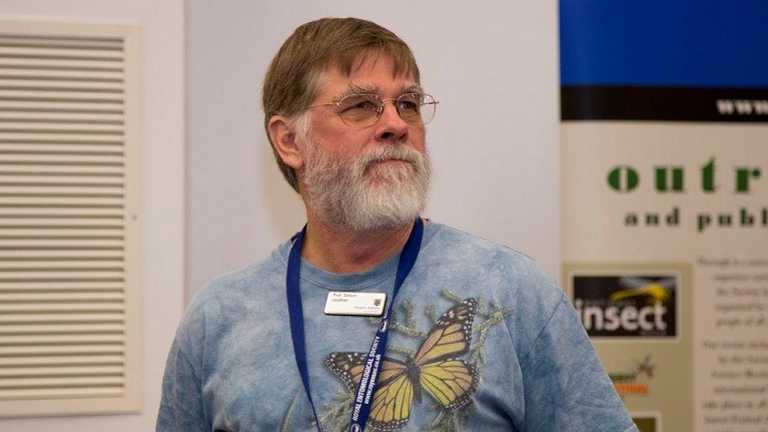 Professor's life celebrated with opening of new entomology and ecology facility
8 October -
 Allied professionals can support farmer mental health - but should not be relied upon and need help themselves, study says
5 October -
 Award-winning graduate takes on Duchy of Cornwall’s first regenerative Farm Business Tenancy
6 October -
 Dairy Manager highly commended as Young Dairy Farmer of the Year at Cream Awards 2026
7 October -
 Graduate planning to transform Shetland farming named Farmers Weekly Ag Student of the Year
2 October -
 125th anniversary celebrations launched by Chancellor Her Royal Highness The Princess Royal
29 September
Related articles
Professor's life celebrated with opening of new entomology and ecology facility
Posted 8 OctoberDairy Manager highly commended as Young Dairy Farmer of the Year at Cream Awards 2026
Posted 7 October