
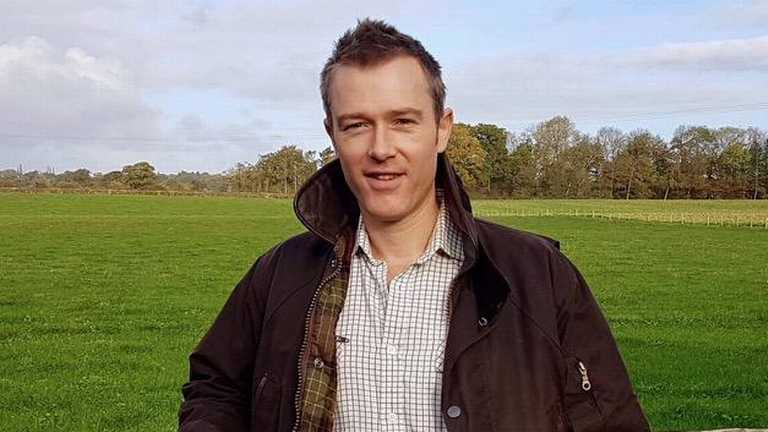
Farm Data and Community Fridge projects shortlisted in national research competition
Posted Today
"I am so proud of our shortlisted applicants and grateful for the amazing work undertaken across the University which is often 'Hidden'. This fantastic competition rightly addresses these gaps."

Entries drawing on two very different projects at Harper Adams University have made the shortlist of a national research competition which focuses on supporting technical skills and achievements.
The Hidden REF awards celebrate research outputs such as software, datasets, or performances which can be overlooked as they are not recorded in the same way as traditional publications - as well as everyone involved in their creation.
The organisers behind the competition aim to change the way universities think about the research they submit to the Research Excellence Framework, the UK’s system for assessing the quality of research in UK higher education institutions.
Explaining their rationale, they note: “Modern research depends on an extraordinary range of outputs, skills and expertise.
“Software, datasets, methods, technical infrastructure and many other contributions are fundamental to the reliability, reproducibility and – importantly – the effectiveness of research. Yet when these contributions are overlooked, there is less incentive to invest in developing and sustaining them.
“Recognising all contributions to research isn’t simply a matter of fairness. It’s essential to improving research itself.”
Building on from the Chair of Hidden REF, Professor Simon Hettrick's keynote presentation at last year's Harper Adam's University Technicians' Conference, Harper Adam's Head of Technical Development, Dr Victoria Talbot, and Deputy Vice Chancellor, Professor Michael Lee, were inspired to recognise the great work undertaken across the University, which is often 'Hidden', by supporting applications to this year's competition.
The Harper Adams entries shortlisted for this year’s final – held this Friday, November 27 – were by Senior Lecturer in Food Nutrition Jon Bentley and Digital Farm Systems and Sustainability Officer Steffan Newell.
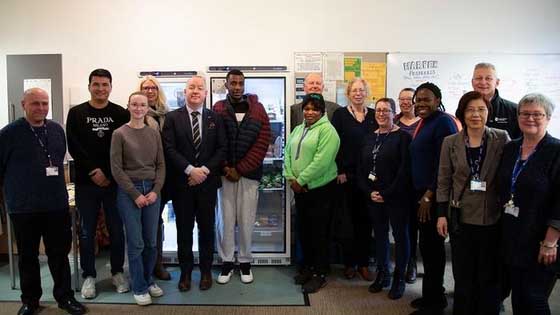
Jon’s shortlisted submission explained how the University’s Community Fridge project combines surplus food redistribution with behaviour change research, participatory action research, teaching and learning, and the development of sustainable citizenship among students and staff.
The fridge is also thought to be the first of its kind to be live-streamed – and uses this real-time digital innovation to improve its accessibility and the efficiency of its surplus food redistribution.
Jon said: “It is proud moment to learn we have been shortlisted for a Hidden REF award. It is a direct result of the volunteers who give up their time to manage, collect, and make excess food available to students and staff at the university.
“We know the important contribution the Community Fridge makes on campus, so now having external recognition of this work is amazing!”
Meanwhile Steffan’s submission focussed on the way the University’s Future Farm is collecting and organising its data – and how that is reshaping both its work and the way it interacts with students, researchers, external organisations and more.
The data has been drawn into a new structure built around four pillars –which include a central farm data hub, infrastructure for carbon accounting and biodiversity monitoring, the stewardship of long-term experimental datasets, and the Future Farm’s role as part of both national and international farm networks.
Steffan’s submission noted: “Agriculture generates large amounts of data through farm management software, livestock systems, machinery platforms, sensors and environmental monitoring tools.
“However, these data are typically collected for specific operational purposes and remain fragmented across multiple systems. This limits their value for research, teaching and wider stakeholder reuse.
“The Four Pillar Data model reconceptualises farm data as a shared strategic resource for research, teaching, farm management and knowledge exchange, rather than as isolated records held within individual operational systems.
“This provides a coherent approach to data stewardship, governance and accessibility across a working commercial farm that also serves research and educational functions.”
Speaking about his shortlisting, Steffan added: “It's fantastic to see the Farm Data team shortlisted for a Hidden REF award. This recognition highlights the often-unseen work that underpins research, teaching and innovation.
“We're proud that the Four Pillars of Farm Data approach is helping make farm data more accessible, connected and useful for a wide range of users.”
Professor Lee added: "I am so proud of our shortlisted applicants and grateful for the amazing work undertaken across the University which is often 'Hidden'. This fantastic competition rightly addresses these gaps.
"I am also grateful for the leadership shown by Dr Talbot in supporting these submissions and the fantastic advancements the University has made as part of the Technician Commitment."
Most read
-
 Academic scoops prestigious environmental award
18 November -
 How a passion for poultry is helping alumna Paige boost hens' happiness
20 November -
 Watch: Food and farming sectors have huge potential to solve youth unemployment crisis, says Higher Education leader
20 November -
 Climate summit criticised as 'missed opportunity'
23 November -
 Harper Adams University lights up for 125th anniversary Festive Celebration
28 October -
 Council celebrates University's 125th anniversary - and growing role in Telford & Wrekin
16 November
Related articles

Promising postgraduate student's soil health research secures NFU Mutual award
Posted 24 NovemberClimate summit criticised as 'missed opportunity'
Posted 23 November